Japan · Itinerary · Updated September 2026
7 days in Japan: Tokyo and Kyoto, in that order
A week is two Japanese cities, not four. The single decision that makes it work is booking into Tokyo and out of Osaka, which hands back the day a return leg would have taken. Fares checked September 2026.
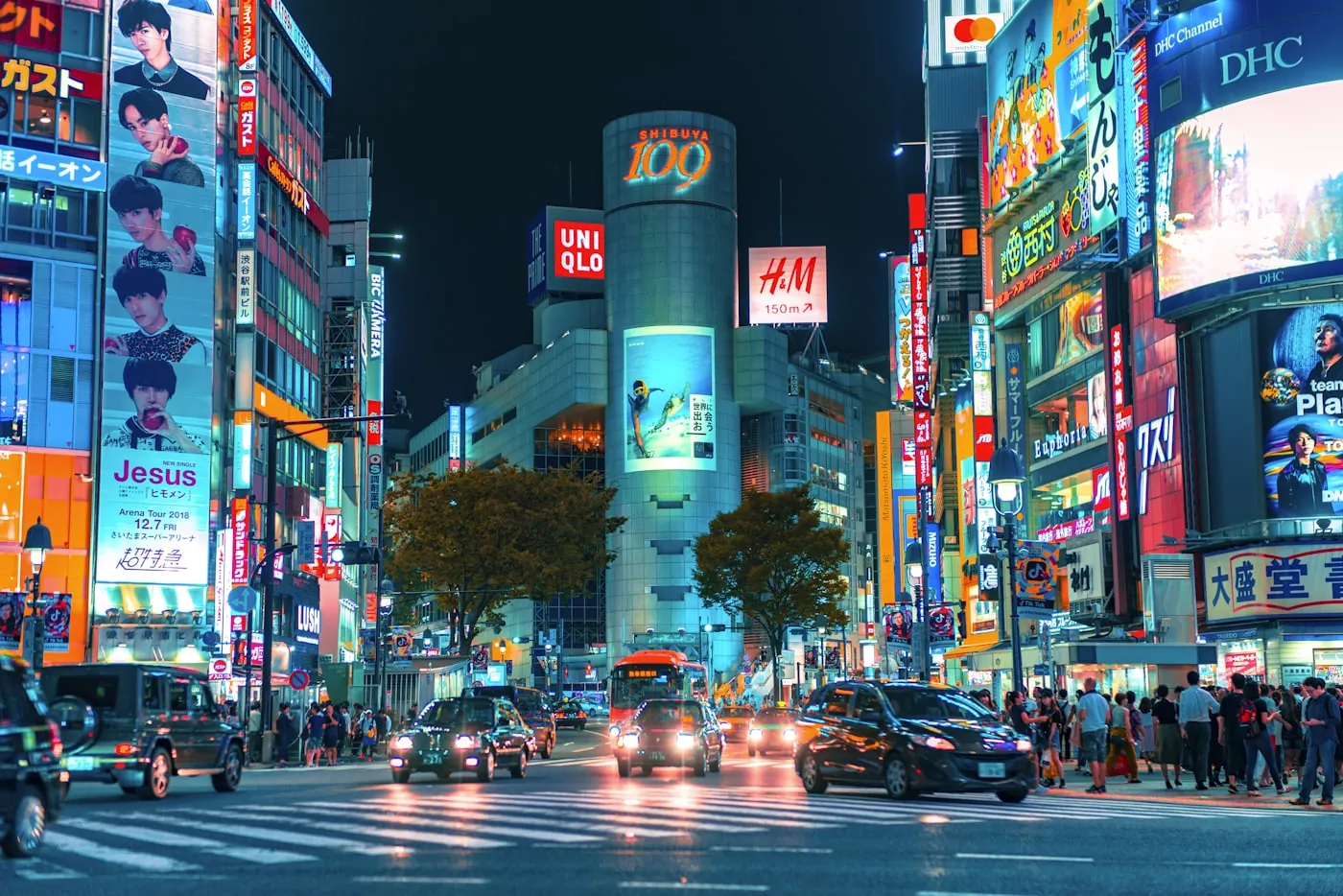
Length
7 days
Budget
¥149,300 / $932
per person, mid-range, no rail pass
Best season
Oct–Nov, Mar–May
Autumn colour or blossom; avoid Golden Week
Stops
4
open-jaw: in Tokyo, out Kansai
The route
Three nights in Tokyo, one shinkansen west, three nights in Kyoto with Nara reached from it, then out through Kansai airport.
Day by day
Days 1–3 · Tokyo
Three nights, and no day trips
Day one belongs to the flight, eat somewhere near the hotel and sleep. Day two takes the old low city: Yanaka's cemetery and shopping street, then Asakusa, then Tsukiji Outer Market if you are up early enough. Day three goes west to Shibuya, Shimokitazawa or Koenji, and ends in Shinjuku's Omoide Yokocho. Nikko and Kamakura are both good and both wrong here. A day trip out of a three-night stay costs a third of the city.
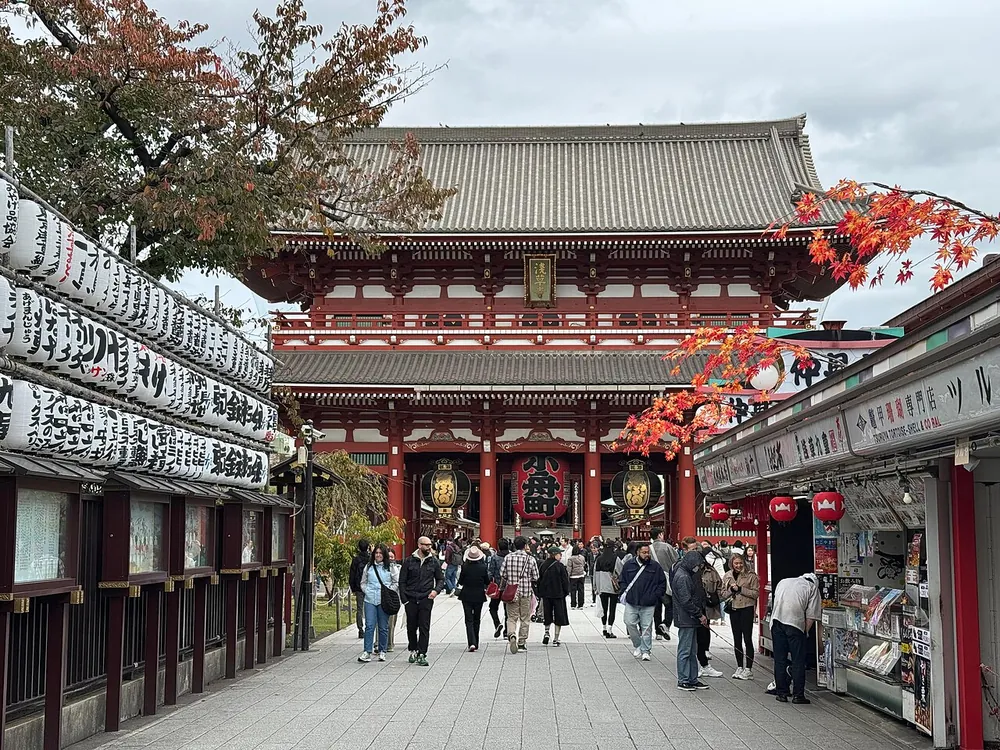
Sleep: Shinjuku or Shibuya for transport, Asakusa or Yanaka for cheaper and quieter.
Days 4–6 · Kyoto
Three nights, all of them used at the edges of the day
Tokyo to Kyoto on the Tokaido shinkansen, ¥13,320 non-reserved, a little over two hours. Kyoto rewards early and late and punishes the middle of the day. Fushimi Inari is free and never closes. Go at night or at six in the morning and the torii tunnels are yours. Kiyomizu-dera is ¥500 and worth the first entry of the day. Arashiyama before eight. Gion and Pontocho after dark. Sleep in the middle if you have to.
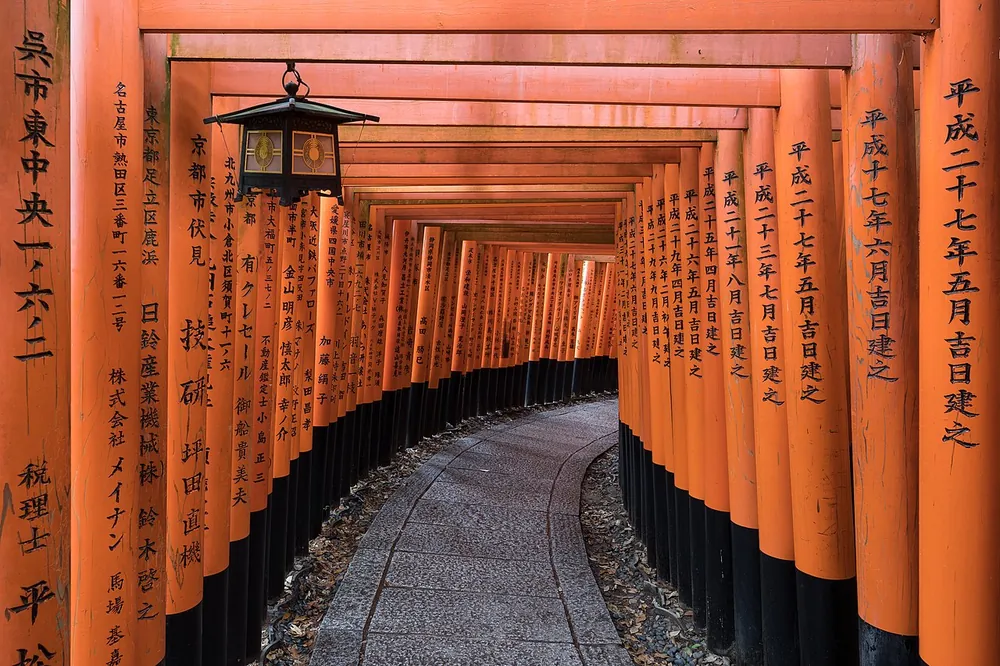
Sleep: Downtown near Karasuma, two subway lines and walkable to Gion.
Day 5 or 6 · Nara
The one day trip worth taking
Forty minutes from Kyoto. Todai-ji's Great Buddha Hall is the largest wooden building most people will ever stand in, and the scale genuinely does not photograph. Kasuga Taisha's stone lantern corridor is fifteen minutes' walk on. Half a day is enough, which is why it survives the cut when Nikko and Kamakura do not.
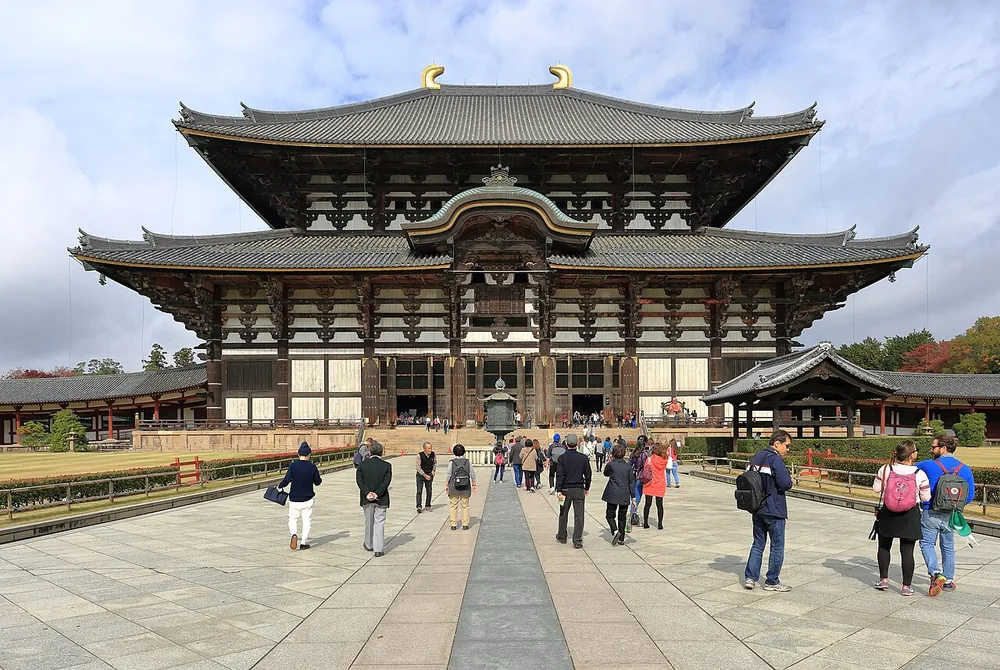
Sleep: Kyoto. Nothing about this trip involves moving hotels twice.
Day 7 · Kansai airport
Out the other end
The Haruka limited express runs Kyoto to Kansai every 30 minutes, 75–90 minutes for ¥3,060 non-reserved: or ¥2,200 on the Haruka One-Way Ticket, sold only to foreign passport holders. Flying out of Kansai instead of returning to Tokyo is the whole reason this itinerary has six usable days rather than five.
Sleep: Nowhere. This is the day you leave.
Best things to do on this route
If you cut the trip short, these are the ones to keep.
- 01
Fushimi Inari at night
Free, unstaffed, open twenty-four hours, and lit. The only way to walk the torii tunnels without a queue.
- 02
Todai-ji's Great Buddha Hall
Go in the first hour and the hall is nearly empty. The scale is the point and it does not photograph.
- 03
Yanaka on foot
The part of Tokyo the war and the bubble both mostly missed. A cemetery, a shopping street, no towers.
- 04
Arashiyama before eight
A corridor of people by nine, genuinely quiet at seven-thirty. The only variable is your alarm.
- 05
Omoide Yokocho after dark
Six seats a bar, smoke, yakitori. Two streets from the busiest station on earth.
Where to stay
Neighbourhoods rather than specific hotels. Prices move, areas don't.
Tokyo: Shinjuku or Shibuya
On a three-night stay, transport matters more than charm. Both put you one train from everything.
Tokyo: Asakusa or Yanaka
Cheaper and quieter, at the cost of ten or fifteen minutes on most journeys. Worth it if you want the old city on your doorstep.
Kyoto: downtown near Karasuma
Central and on two subway lines, which matters because this itinerary works the early mornings and late evenings.
What it cost
Per person, 7 days. International flights not included.
| Category | Cost |
|---|---|
| Accommodation: 6 nights | ¥66,000 / $412 |
| Food and drink | ¥38,500 / $240 |
| Intercity transport: shinkansen and airport express | ¥16,400 / $102 |
| Local transport and the Nara day trip | ¥8,000 / $50 |
| Activities and entry fees | ¥8,000 / $50 |
| SIM, laundry, coin lockers, everything else | ¥7,000 / $44 |
| Lodging tax and the ¥3,000 departure tax | ¥5,400 / $34 |
| Total | ¥149,300 / $932 |
Converted at ¥160.27 to the dollar, checked 2 September 2026. About ¥21,300 a day, the cheapest of the Japan routes, because the open jaw removes the long return leg that dominates the others. The ten-day route carries a Tokyo–Hiroshima return of roughly ¥31,700; this one carries ¥16,400 of transport in total.
Getting around
Book into Tokyo and out of Kansai
The single highest-value decision on a seven-day trip. A return to Tokyo costs another ¥13,320 and, worse, most of a day. Open-jaw fares from Europe and North America are usually within a few percent of a return, so this is close to free and buys back a seventh of the holiday.
The rail pass is not close
Total intercity travel here is ¥16,400. A 7-day pass is ¥50,000, rising to ¥53,000 on 1 October 2026. Even the Tokyo–Kyoto leg alone at ¥13,320 is a quarter of the pass. There is no version of a week in two cities where a national pass makes sense.
Regional tickets, though, do pay
The Haruka One-Way Ticket takes Kyoto to Kansai airport from ¥3,060 to ¥2,200, and is sold only to foreign passport holders. Most JR regions run an equivalent. These are the tickets worth the paperwork; the national pass is not.
Nozomi costs extra even with a pass
Worth knowing if you are comparing anyway: a pass covers Hikari and Sakura outright, but Nozomi and Mizuho carry a supplement, ¥4,960 between Tokyo and Kyoto. The slower service runs the same line and costs about twenty minutes.
Packing notes
The things that are annoying to find locally, or that people forget.
- Cash. Temple entries, coin lockers and small restaurants are still cash-only. 7-Eleven ATMs take foreign cards reliably.
- Shoes you can take off one-handed. You will do it several times a day.
- An IC card, Suica or Pasmo, both available as phone passes. Covers subways, buses and convenience stores nationwide.
- A day bag small enough for a station coin locker, so the Nara day trip does not involve luggage.
- Your passport every day. Required for tax-free purchases and for the foreign-visitor rail tickets that make this route cheap.
- Layers. Trains and restaurants are heated hard in winter and chilled hard in summer.
Why there is no Hiroshima on this route
Because a week cannot pay for it. Hiroshima and Miyajima are worth two days, and the transport to reach them from Kyoto and then leave the country is roughly ¥29,000 and the better part of another day. That is a third of this itinerary spent on one stop.
The 10-day route adds it properly, along with Himeji on the way, and keeps four nights in each city rather than three.
The same reasoning removes Hakone, Nikko and Kamakura. All three are good; all three are day trips; and a day trip out of a three-night stay is a third of that city gone. Seven days in Japan is two cities used well, and the discipline is in what you decline.
What three nights each actually buys
Enough to work Kyoto at the edges of the day, which is the only way it is pleasant: Fushimi Inari before six or after dark, Arashiyama before eight, the middle of the day spent indoors or asleep. Two nights would mean seeing it at noon with everyone else, which is the version people come home disappointed by.