Japan · Itinerary · Updated September 2026
5 days in Japan: Tokyo and Kyoto, and nothing else
Five days in Japan is two cities only because the shinkansen makes the transfer cost half a day rather than a whole one. It is the floor, not a comfortable trip, and this is what it actually looks like. Fares checked September 2026.
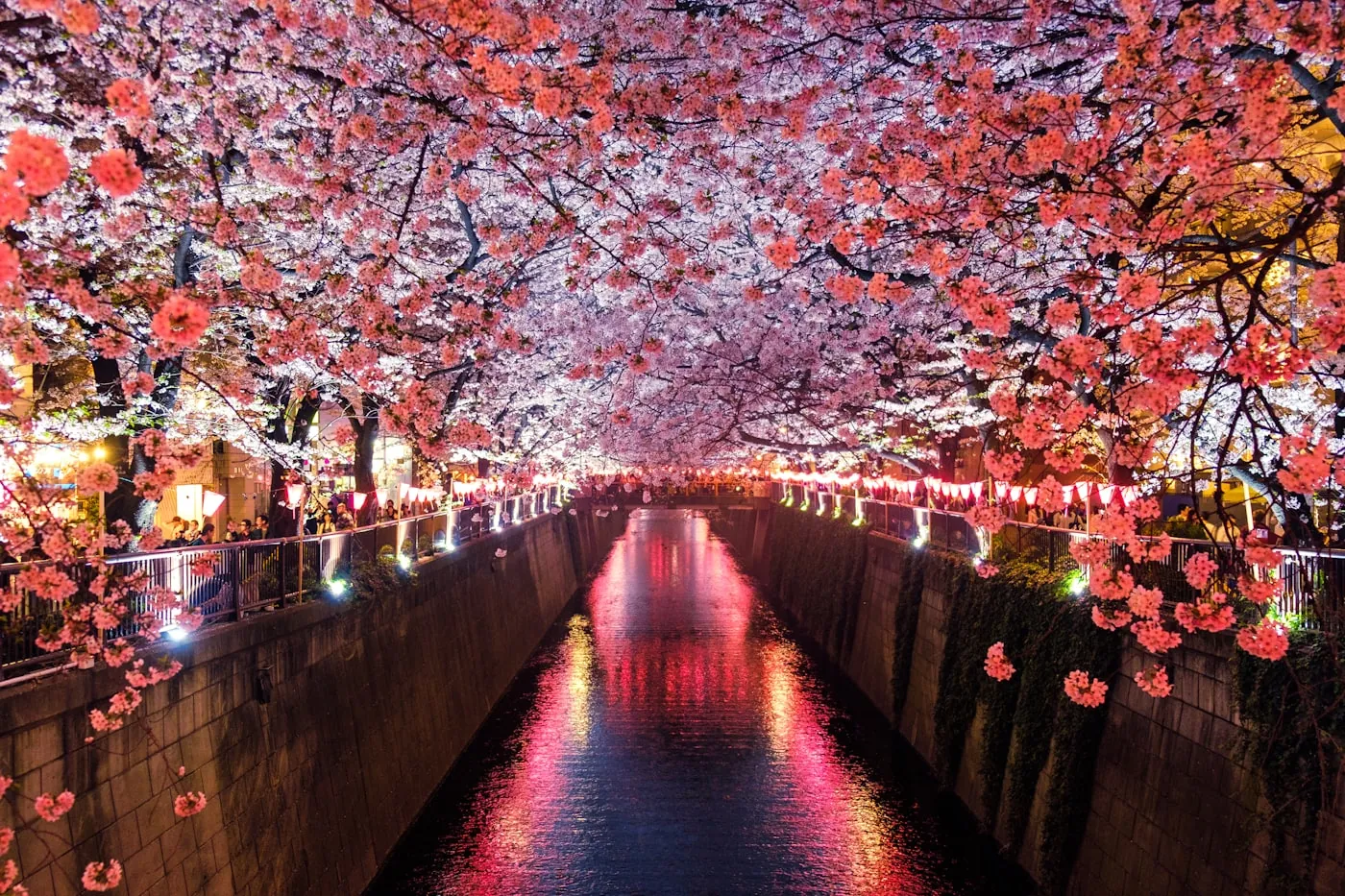
Length
5 days
Budget
¥107,500 / $671
per person, mid-range, no rail pass
Best season
Oct–Nov, Mar–May
Autumn colour or blossom; avoid Golden Week
Stops
3
open-jaw: in Tokyo, out Kansai
The route
Two nights in Tokyo, the Tokaido shinkansen west, two nights in Kyoto, out through Kansai airport.
Day by day
Days 1–2 · Tokyo
Two nights, one of which the flight takes
Land, get to the hotel, eat within walking distance and sleep. Do not plan day one, because the time change will plan it for you. Day two is the only full Tokyo day you have, so spend it in one direction rather than crossing the city twice: either the old low city, meaning Yanaka, Ueno and Asakusa, or the west, meaning Shibuya, Shimokitazawa and Shinjuku after dark. Both are a full day. Doing half of each is how you end up remembering trains.
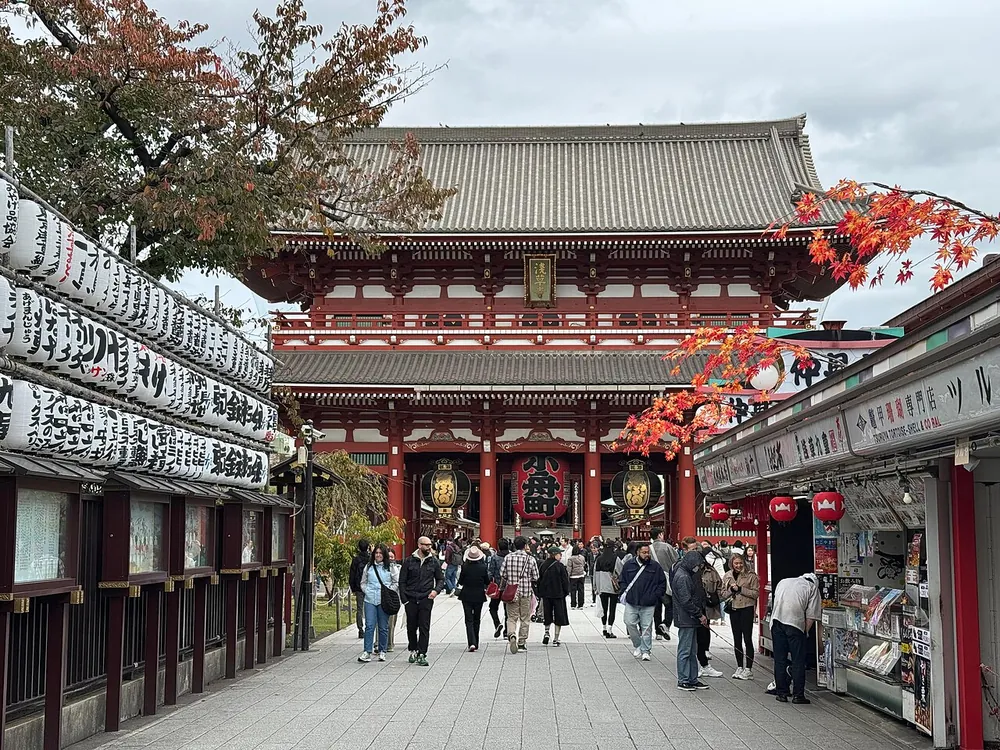
Sleep: Shinjuku or Shibuya. On two nights, transport beats charm.
Days 3–4 · Kyoto
Two nights, worked hard at both ends of the day
Morning shinkansen from Tokyo, ¥13,320 non-reserved, a little over two hours, and you are in Kyoto for lunch. Two nights means two early mornings and two evenings, which is where Kyoto lives anyway. Fushimi Inari is free and never closes, go at dusk or at six. Kiyomizu-dera is ¥500 at opening. Arashiyama before eight or not at all. Gion and Pontocho after dark. The middle of each day is for eating and sitting down.
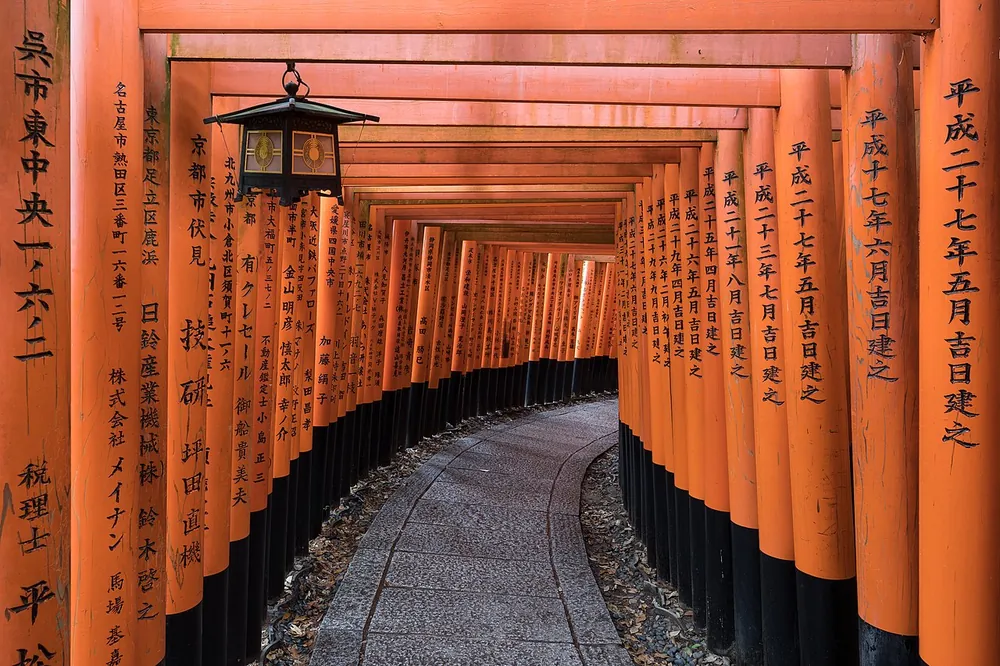
Sleep: Downtown near Karasuma, so the early starts are short walks.
Day 5 · Kansai airport
Out the other end, with the morning intact
The Haruka limited express runs Kyoto to Kansai every 30 minutes, 75–90 minutes for ¥3,060 non-reserved, or ¥2,200 on the foreign-visitor Haruka One-Way Ticket. Because you are not going back to Tokyo, the last morning is still a morning: one more temple, or Nishiki Market, before the train.
Sleep: Nowhere. This is the day you leave.
Best things to do on this route
If you cut the trip short, these are the ones to keep.
- 01
Fushimi Inari at dusk
Free, unstaffed, open all night and lit. On a two-night stay it is the one sight you can have entirely to yourself.
- 02
Arashiyama before eight
A corridor of people by nine. The only variable is your alarm, and on a short trip that is the whole game.
- 03
Omoide Yokocho after dark
Six seats a bar, smoke, yakitori, two streets from Shinjuku station. The best hour of a first night in Tokyo.
- 04
Nishiki Market on the last morning
Five minutes from Karasuma, open from nine, and a better airport breakfast than the airport's.
- 05
The Tokaido shinkansen itself
Two hours and fifteen minutes city centre to city centre. It is the reason this trip is possible at all, and Fuji is on the right-hand side.
Where to stay
Neighbourhoods rather than specific hotels. Prices move, areas don't.
Tokyo: Shinjuku or Shibuya
Two nights is too short to spend twenty minutes reaching a station. Pay for the location; you are buying time, not a room.
Kyoto: downtown near Karasuma
Central and on two subway lines, which matters more here than anywhere because this itinerary runs on early starts.
What it cost
Per person, 5 days. International flights not included.
| Category | Cost |
|---|---|
| Accommodation: 4 nights | ¥44,000 / $275 |
| Food and drink | ¥27,500 / $172 |
| Intercity transport: shinkansen and airport express | ¥16,400 / $102 |
| Local transport | ¥5,000 / $31 |
| Activities and entry fees | ¥5,000 / $31 |
| SIM, laundry, coin lockers, everything else | ¥5,000 / $31 |
| Lodging tax and the ¥3,000 departure tax | ¥4,600 / $29 |
| Total | ¥107,500 / $671 |
Converted at ¥160.27 to the dollar, checked 2 September 2026. About ¥21,500 a day, marginally more than the seven-day route despite being shorter. The ¥16,400 of transport is identical on both, so five days carries it over fewer days. That is the shape of every Japan route on this site: the long legs do not shrink, so cutting days raises the daily rate rather than lowering it.
Getting around
The open jaw is not optional here
In through Haneda or Narita, out through Kansai. A return to Tokyo costs ¥13,320 and half of your last day, which on a five-day trip is a tenth of the holiday spent going back somewhere you have already been. Open-jaw long-haul fares are usually within a few percent of a return.
There is no rail pass argument at this length
Total intercity travel is ¥16,400. A 7-day pass is ¥50,000, rising to ¥53,000 on 1 October 2026. Three times what you will actually spend, for a trip shorter than the pass. Buy the two tickets.
Reserve the shinkansen seat, or do not
Non-reserved is ¥13,320 and there are three unreserved cars on almost every departure; reserved is ¥14,170. Outside Golden Week, Obon and New Year, turning up and queueing for the next train works and costs less.
The Haruka discount is worth the passport
Kyoto to Kansai drops from ¥3,060 to ¥2,200 on the foreign-visitor Haruka One-Way Ticket. It is the kind of regional ticket that genuinely pays, unlike the national pass.
Packing notes
The things that are annoying to find locally, or that people forget.
- Cash. Temple entries, coin lockers and small restaurants are still cash-only. 7-Eleven ATMs take foreign cards reliably.
- An IC card, Suica or Pasmo, both available as phone passes. Set it up before you land rather than at the machine.
- Shoes you can take off one-handed.
- Hand luggage only if you can manage it. On a five-day trip with one hotel change, the shinkansen luggage rules and the coin lockers both get easier.
- Your passport every day. Required for the foreign-visitor rail tickets and for tax-free purchases.
Two nights each is the floor, and it shows
This itinerary exists because the Tokaido shinkansen is 2h15 from city centre to city centre. If the transfer were a flight, five days would be one city and this article would say so, the way the Thailand five-day route does.
But two nights is genuinely two nights. In Tokyo it means one full day, and the article above is blunt about spending it in one direction. In Kyoto it means two early mornings and two evenings, with the middle of both days written off, which is how Kyoto should be done at any length, but at two nights there is no slack if it rains.
What is not here: Nara, Osaka, Hakone, Nikko, Kamakura, Hiroshima. Every one of them is a day, and there are no spare days. A day trip out of a two-night stay is not a day trip, it is a replacement for the city you came to see.
If you can find two more days, the 7-day route adds a third night in each city and Nara on top, and it is a materially better trip. The difference between working the edges of the day because you want to and working them because you have to.