Spain · Itinerary · Updated September 2026
7 days in Spain: Seville, Córdoba and Granada
A week is not enough for Spain, but it is exactly enough for Andalusia. Three cities, two trains of under two hours, and no internal flight. Fares and fees checked September 2026.
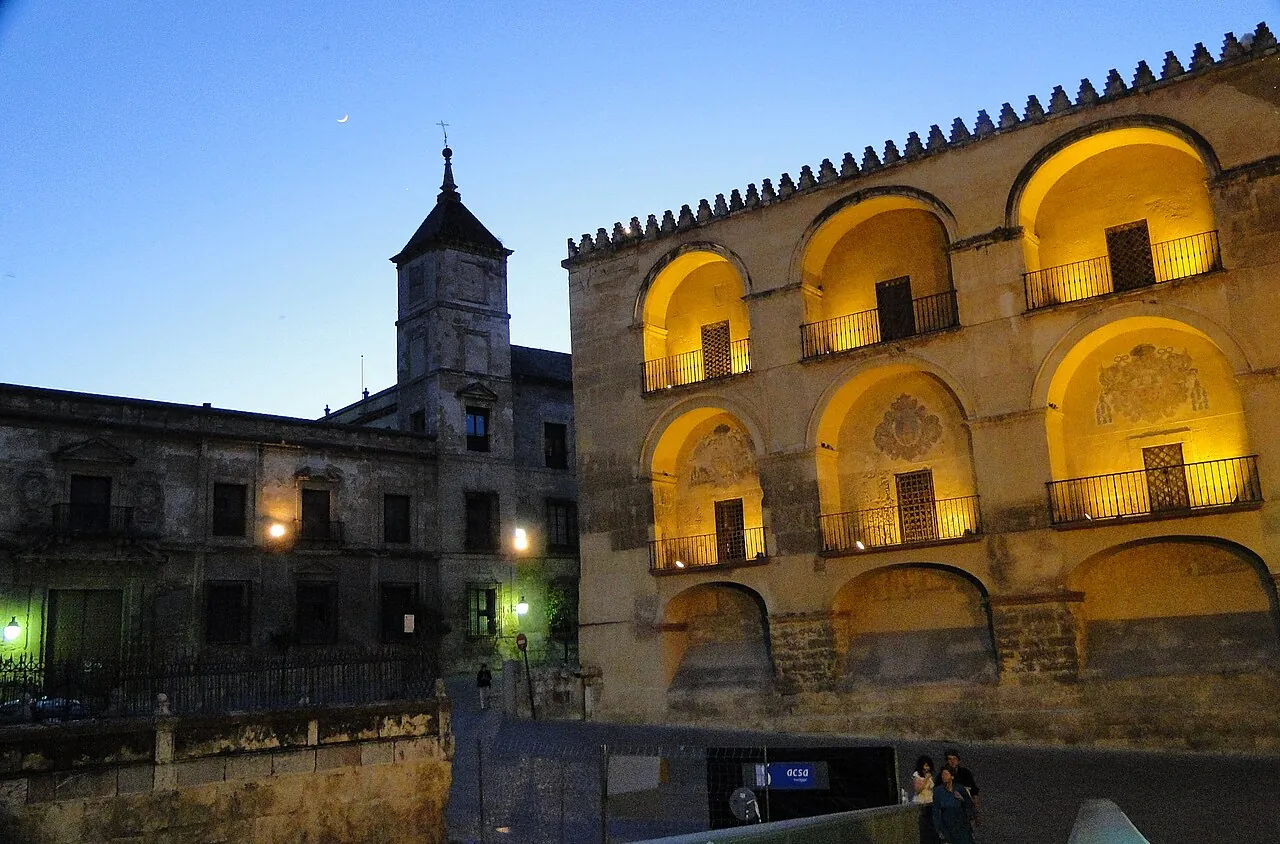
Adam Jones, Ph.D / Wikimedia Commons, CC BY-SA 3.0
Length
7 days
Budget
€1,120 / $1,298
per person, mid-range
Best season
Apr–Jun, Sep–Oct
Andalusia hits 40°C in July and August
Stops
4
3 cities, 2 trains
The route
Three nights in Seville, one in Córdoba, two in Granada. Fly into Seville, out of Málaga.
Day by day
Days 1–3 · Seville
Three nights, and the only stop that gets a spare day
The Real Alcázar is €15.50 and still a working royal residence, which is why its upper floor can close without notice. Book a morning slot and go first. Three nights covers the Alcázar, the cathedral and the Giralda, the Plaza de España, and Triana across the river, with one evening left over that is nothing but a slow crawl through Santa Cruz. **Andalusia charges no tourist tax**, so every bed on this route costs what it said.
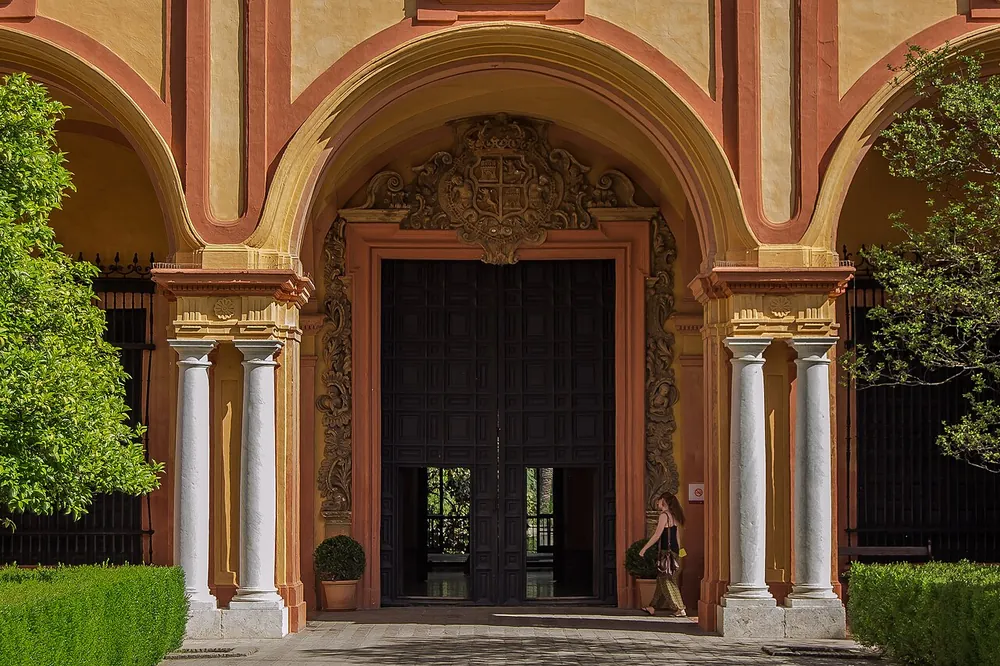
Sleep: Santa Cruz for the lanes, Triana for the food and half the noise.
Day 4 · Córdoba
Fifty-two minutes, and a night bought for one hour
The fastest AVE from Seville is fifty-two minutes, so this is an afternoon arrival with the evening free, and the Mezquita lit from the Puente Romano is worth the walk before dinner. The building itself waits until tomorrow, because it is **free Monday to Saturday from 08:30 to 09:30** and that hour is the entire reason you are sleeping here.
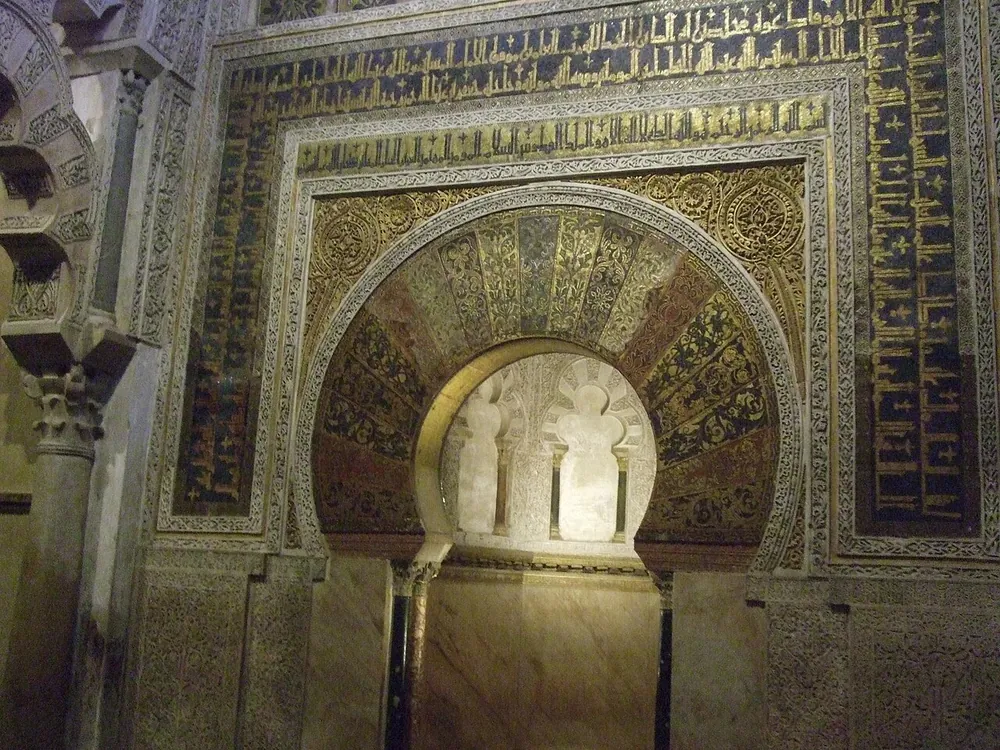
Sleep: In the Judería, inside the old walls and five minutes from the doors.
Days 5–6 · Granada
The free hour, a midday train, and the Alhambra on day six
Be at the Mezquita for 08:30. An hour later, walk out and take a midday train. Córdoba to Granada is 1h44 direct, though **departures are only about every four hours**, so this is a timetable to read the night before. That puts you in Granada mid-afternoon for the Albaicín and sunset at the Mirador de San Nicolás, and leaves day six whole for the Alhambra: €22.27 for a timed Nasrid Palaces slot, the Generalife and the Alcazaba.
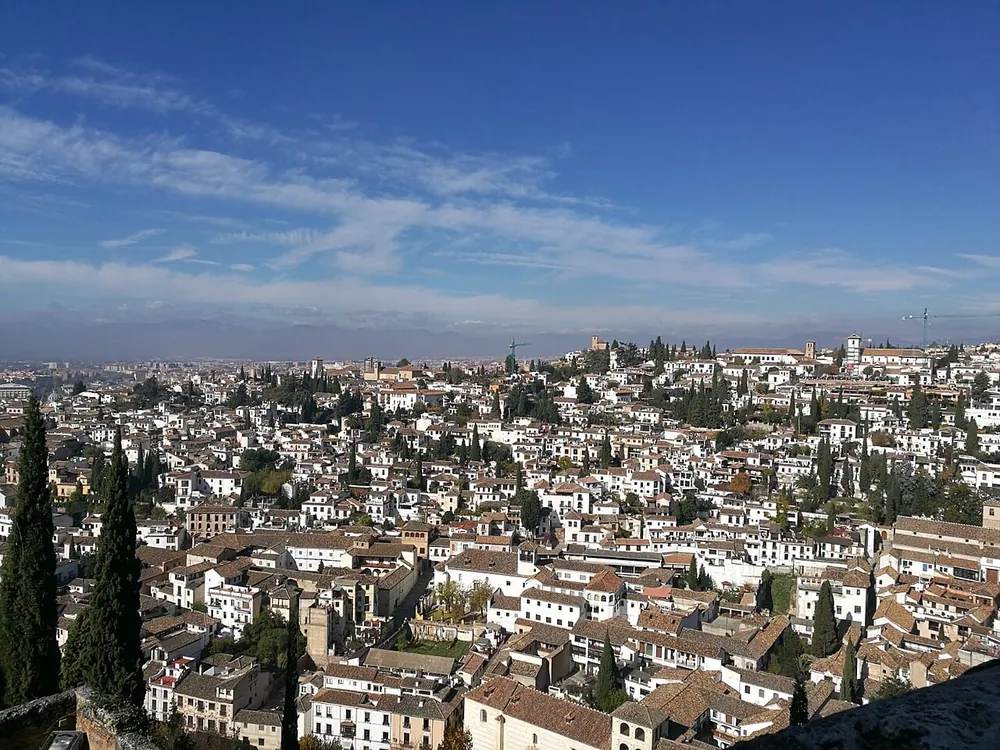
Sleep: The Albaicín, uphill and worth it, or Realejo for flatter streets.
Day 7 · Málaga, and out
Ninety minutes to a real airport
ALSA runs about forty buses a day from Granada to Málaga; the direct ones take an hour and a quarter to an hour and a half, the ones that stop everywhere take two and a half. Book a direct service. Málaga flies across Europe without connecting, which is what lets this week be an open jaw rather than a there-and-back.
Sleep: Nowhere. This is the day you leave.
Best things to do on this route
If you cut the trip short, these are the ones to keep.
- 01
The free hour at the Mezquita
Monday to Saturday, 08:30 to 09:30, no ticket at all. Hundreds of striped arches and almost nobody under them, the best hour of the week, and the cheapest.
- 02
The Nasrid Palaces on day six
€22.27 and timed. With two nights in Granada there is exactly one full day, so this is the fixed point the whole week is built around.
- 03
The Real Alcázar, first thing
€15.50 for a palace the Spanish crown still uses. Go at opening; the upper floor shuts without notice when it is in use.
- 04
The Plaza de España
A half-kilometre curve of tiled brick and canal built for the 1929 exposition. Free, and the best twenty minutes in Seville.
- 05
The Albaicín at sunset
The Mirador de San Nicolás looks straight across at the Alhambra with the Sierra Nevada behind it. Free, and crowded for a reason.
Where to stay
Neighbourhoods rather than specific hotels. Prices move, areas don't.
Seville: Triana
Across the river from the monuments, which is why it costs less and sounds better. Ten minutes on foot to the cathedral.
Seville: Santa Cruz
Inside the old quarter, on the Alcázar's doorstep and loud until late. Better if three nights of walking everywhere matters more than sleeping.
Córdoba: the Judería
Inside the walls and five minutes from the Mezquita doors. You are here for one morning that starts at 08:30; sleep next to it.
Granada: the Albaicín
Whitewashed lanes above the city with the Alhambra opposite. Steep, cobbled, and no use at all with a wheeled suitcase.
What it cost
Per person, 7 days. International flights not included.
| Category | Cost |
|---|---|
| Accommodation: 6 nights | €535 / $620 |
| Food and drink | €385 / $446 |
| Activities and entry fees | €65 / $75 |
| Local transport, the Málaga bus and transfers | €60 / $70 |
| Trains: two legs | €40 / $46 |
| SIM, laundry, everything else | €35 / $41 |
| Total | €1,120 / $1,298 |
Converted at €1 = $1.1593, checked 2 September 2026. About €160 a day, the cheapest Spain route on this site, and two of the rows explain why. The trains are €40 because both legs are short and neither is an AVE flagship fare. The activities row is €65 for three world-class monuments, because one of them, the Mezquita, is free at the hour this itinerary is built around.
Getting around
Book the Alhambra first, and for day six
Sales open three months ahead and peak-season general admission is gone one to two months before the date. Two nights in Granada leaves exactly one full day, and the first afternoon is spent on a train, so the slot has to be day six. Get the ticket before the flights exist.
Córdoba to Granada runs about every four hours
1h44 direct, first departure around half past eight and the last in the late evening, but only a handful in between. Check the actual timetable the night before, because the gap between the post-Mezquita train and the next one is most of an afternoon in Granada.
Fly in to Seville, out of Málaga
An open jaw costs little more than a return and saves a day of backtracking on a week that has none to spare. Granada's own airport is small and routes through Madrid or Barcelona; Málaga is ninety minutes by bus and flies direct.
Two trains is the whole itinerary
Fifty-two minutes and one hour forty-four. Nothing here needs a car, an internal flight, or a transfer booked in advance beyond the seats themselves, which is the argument for spending a week in one region rather than crossing the country.
Packing notes
The things that are annoying to find locally, or that people forget.
- Shoes you can climb in. The Albaicín is cobbled and near-vertical.
- An Alhambra ticket for day six, bought months ago.
- A refillable bottle. Andalusian street fountains are drinkable and August is not survivable without one.
- A light layer for Granada. It sits at 700m under the Sierra Nevada and the evenings drop hard.
- Cards work everywhere; carry €20 in coins for lockers and the odd bar.
- A soft bag rather than a hard case if you are sleeping in the Albaicín. There are steps.
Why this week has no Madrid in it
Because Andalusia is a region and Madrid is four hundred kilometres north of it. Adding the capital to seven days means two more long trains and two fewer nights in the south, and what you gain is a museum afternoon.
The three cities here are 52 minutes and 1h44 apart. That is the whole reason a week works: the travel on this route totals under three hours, against nearly eight for the version that starts in Madrid. Every hour saved goes into a city rather than a seat.
If Madrid and Toledo are the draw, do not compress them into this. Take the 10-day route instead, which adds them at the front without taking anything from Andalusia except one Granada night.
The itinerary is built backwards from two clocks
Almost nothing here is flexible, and it is worth seeing why before you book.
08:30, Monday to Saturday. The Mezquita’s free hour. It is the reason Córdoba is an overnight rather than a stop between trains. No train from Seville arrives in time, and a €15 ticket at eleven in the morning buys a worse experience than a free one at half past eight, because the hypostyle hall only works when you can see down the aisles.
Day six, whatever slot you were given. The Alhambra sells out one to two months ahead in season and there is no door supply once it has. With two Granada nights and a train eating the first afternoon, there is one full day available, and the ticket has to land on it.
Get those two right and the rest of the week arranges itself.
Three nights in Seville, not two
The obvious economy is to take a night off Seville and give it to Granada, so that both cities have two. It is the wrong trade.
Granada’s second night is already doing a specific job: the Alhambra needs a whole day, and it is the day after a train. A third night there would buy the Alpujarras, which is genuinely good and genuinely needs fourteen days to be worth the detour.
Seville’s third night buys something smaller and better suited to a week: an evening with nothing scheduled in it. On a seven-day trip with two moves, one unplanned evening is the difference between a holiday and an itinerary.