Spain · Itinerary · Updated September 2026
14 days in Spain: Barcelona to Granada by high-speed train
Córdoba to Seville is fifty-two minutes. Madrid to Toledo is thirty-four. The usual Barcelona–Madrid–Seville triangle treats Spain as three cities far apart, when the network has spent thirty years making them close. Fares and fees checked September 2026.
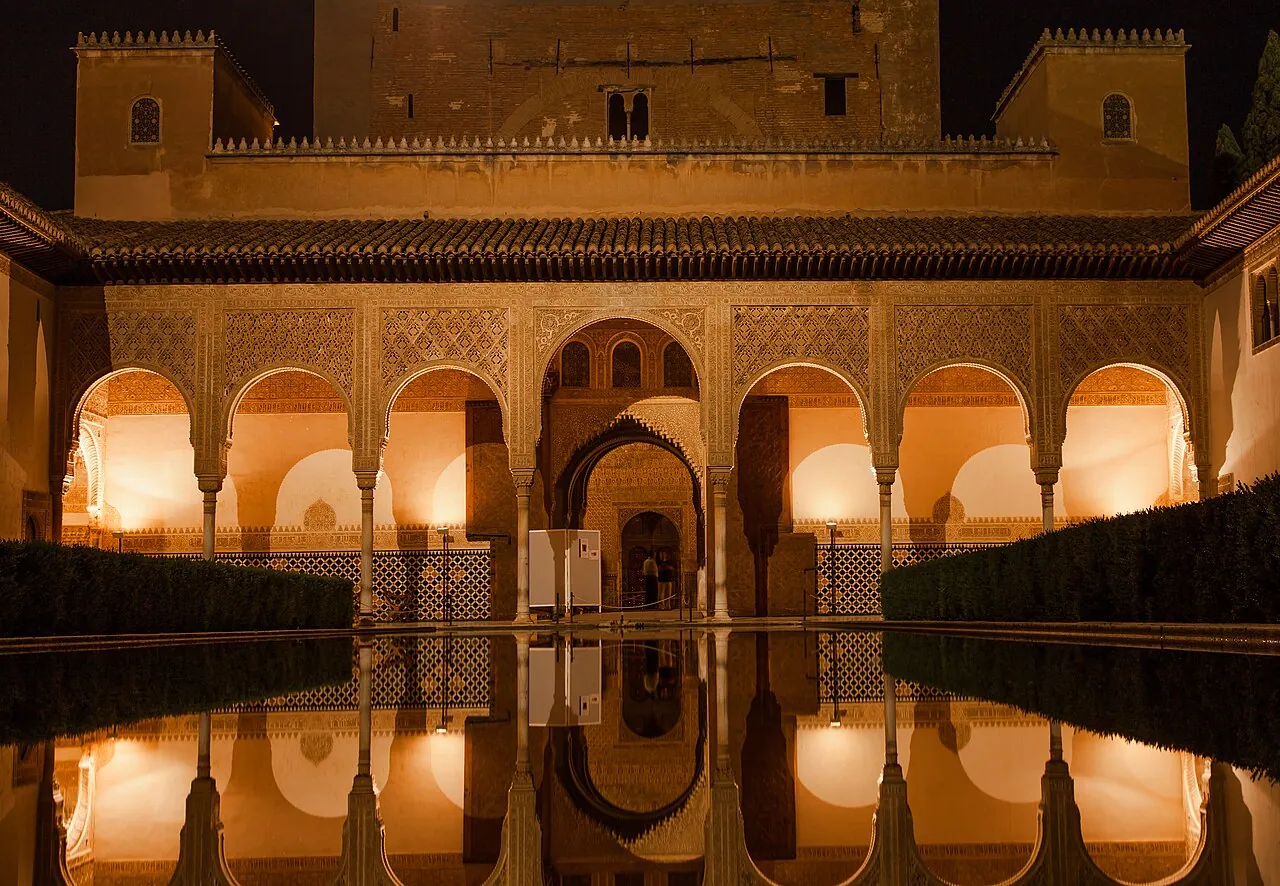
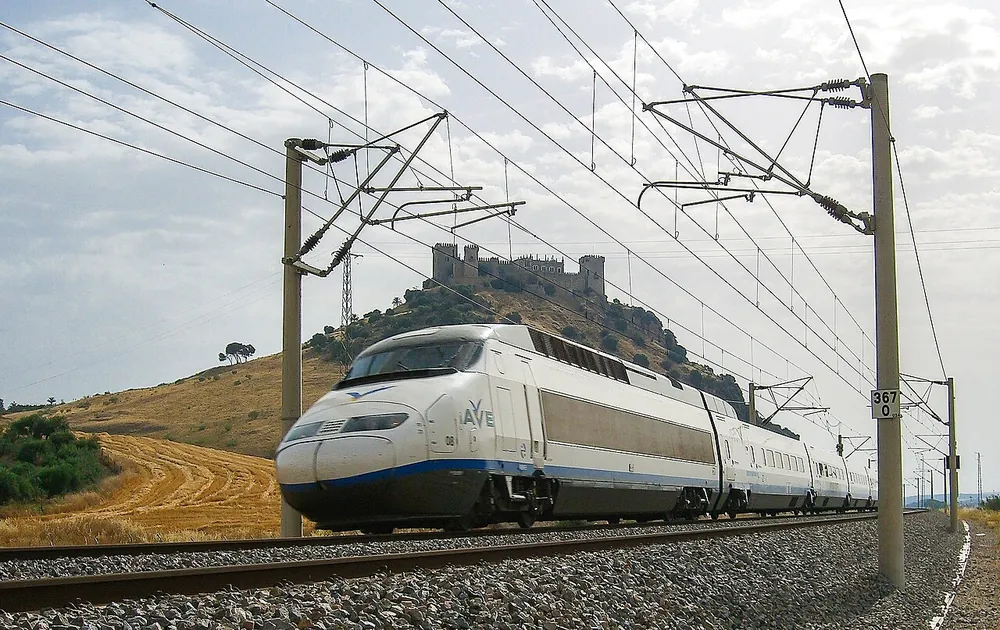
Grand Parc - Bordeaux, France / Wikimedia Commons, CC BY 2.0
Length
14 days
Budget
€2,550 / $2,956
per person, mid-range
Best season
Apr–Jun, Sep–Oct
Andalusia hits 40°C in July and August
Stops
7
6 stops, no internal flights
The route
Three nights in Barcelona, three in Madrid with Toledo as a day trip, then south down the AVE line through Córdoba and Seville to three nights in Granada.
Day by day
Days 1–3 · Barcelona
Three nights, and the tax that doubled in April
The Sagrada Família is €26 with the audioguide and €36 with a tower, and a **centenary surcharge of €2–5 runs from May to December 2026**. The basilica is marking a hundred years since Gaudí died under a tram. Park Güell's monumental zone is ticketed and timed. But the figure that actually moves the budget is the bed tax: since **1 April 2026** the city surcharge is €5 per person per night on top of the Catalan regional levy, which puts the total at €9.50 a night in a tourist apartment and €12.00 in a five-star. It is charged per person, so a couple staying three nights pays between €57 and €72 in tax alone.
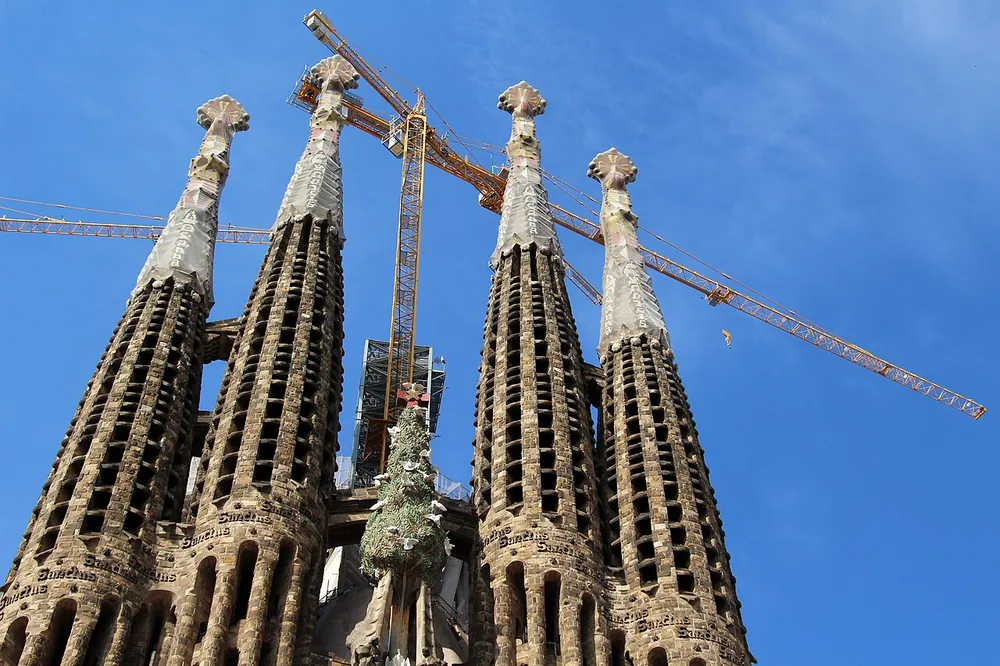
Sleep: Gràcia or El Born. Both are walkable, neither is the Rambla.
Days 4–5 · Madrid
Two days, and the Prado free in its last two hours
The AVE from Barcelona is 2h30, and booked early it is €17. The same seat bought the day before is around €95. The Prado is €15 and **free for the final two hours of every day**, which is also when the tour groups have gone. Give it the late slot and the Reina Sofía an afternoon. Madrid does not eat before nine and does not think this is unusual.
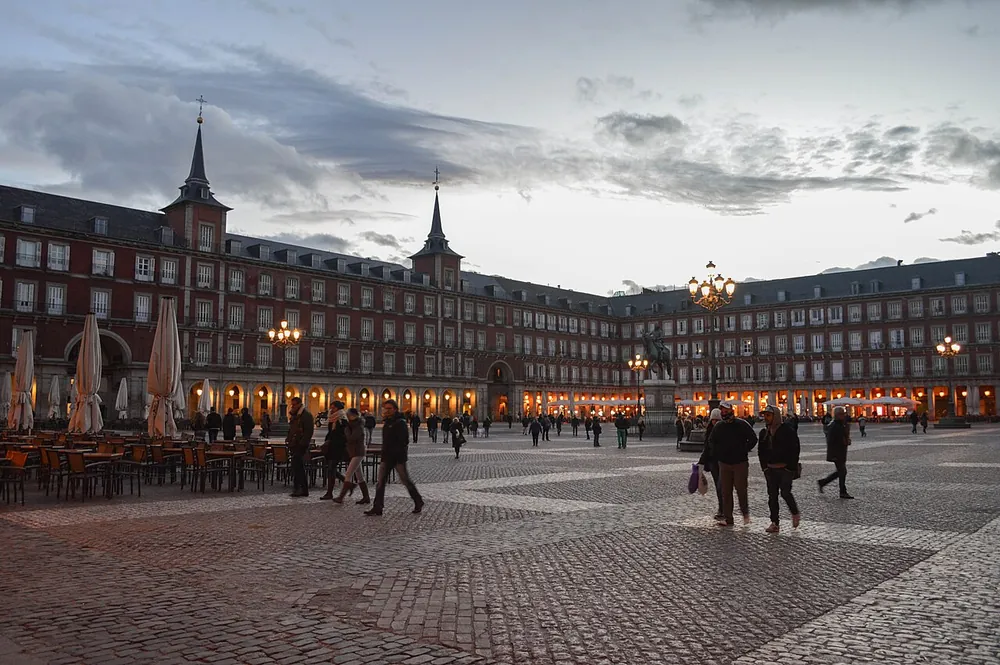
Sleep: Malasaña or Lavapiés for the food; Sol if you want to walk everywhere.
Day 6 · Toledo
Thirty-four minutes, and the best day trip in Spain
The Avant from Atocha takes thirty-four minutes, which makes Toledo closer to Madrid than most of Madrid is. A walled city on a granite spur with the Tagus wrapped around three sides of it, and eight hundred years of Muslim, Jewish and Christian building stacked into the same square kilometre. Go early, stay for the evening light on the gorge, and take a late train back.
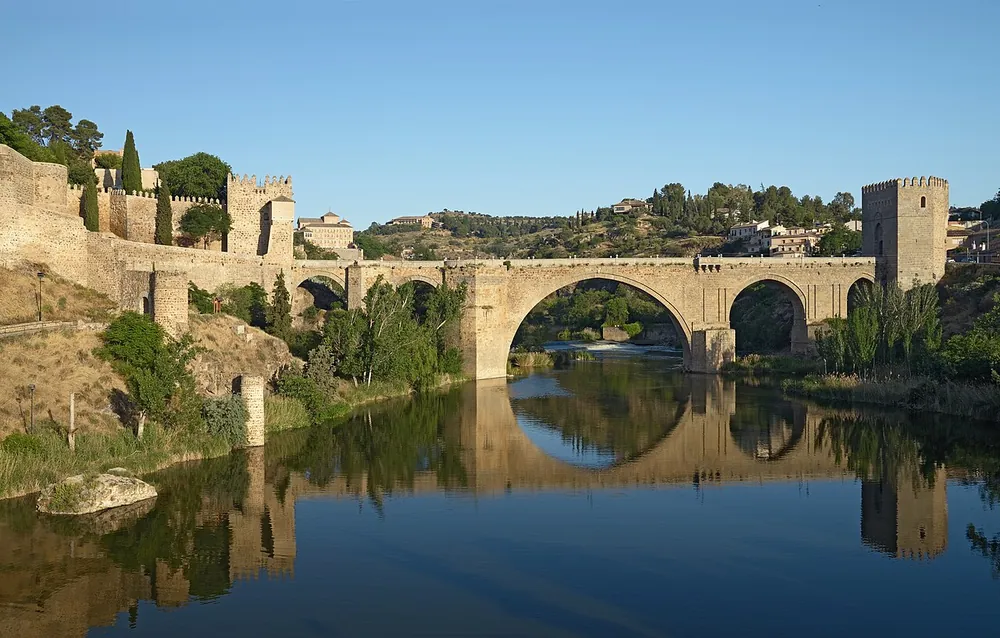
Sleep: Back in Madrid. A third night in the same bed, nothing repacked.
Day 7 · Córdoba
One night, and the free hour before the doors open properly
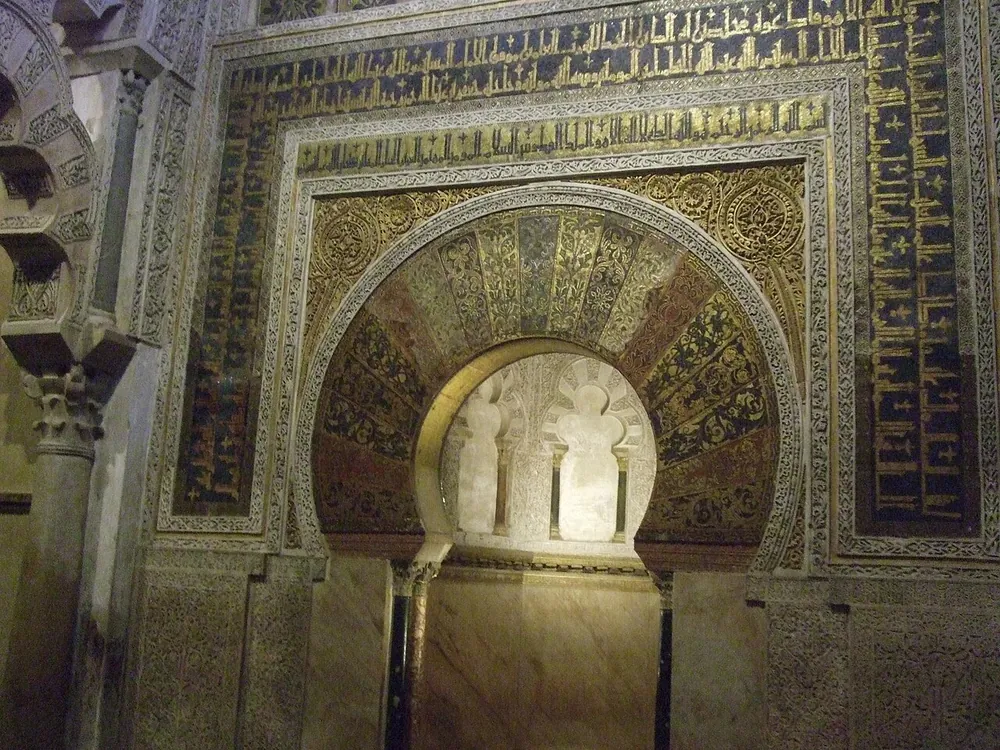
An hour and forty minutes from Madrid on the AVE, with departures every thirty to sixty minutes. The Mezquita is €15, but it is **free Monday to Saturday from 08:30 to 09:30**, and in that hour the forest of red-and-white arches is nearly empty. Which is the whole reason to sleep here rather than day-trip in: the free hour is a morning ticket, and you cannot make it off a train from Seville.
Sleep: In the Judería, inside the old walls and five minutes from the doors.
Days 8–10 · Seville
Fifty-two minutes south, and no bed tax at all
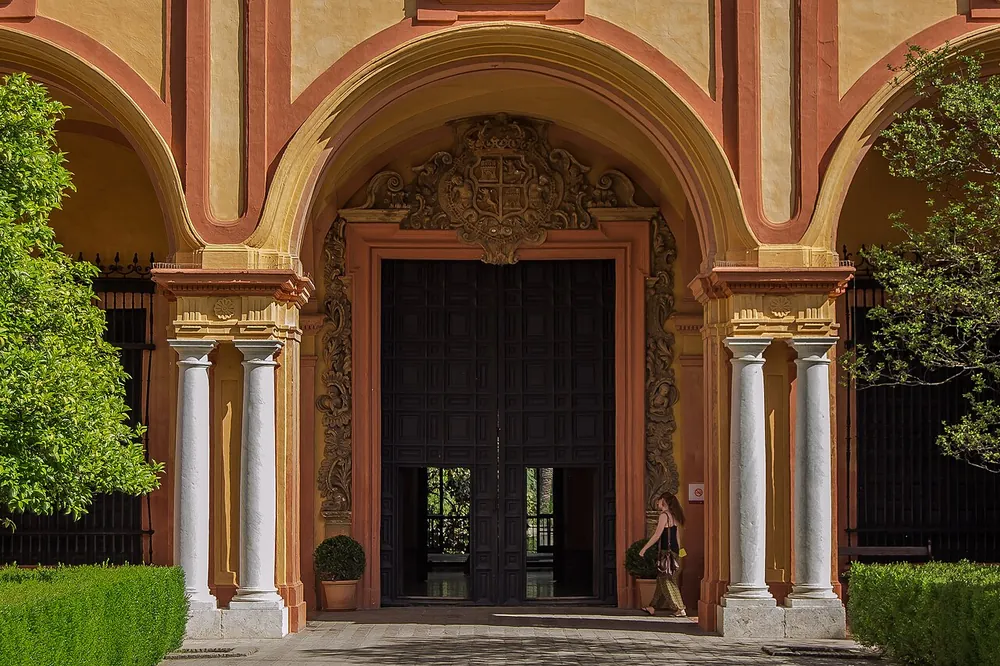
The fastest AVE from Córdoba is fifty-two minutes. The Real Alcázar is €15.50 and still a working royal residence, which is why its upper floor can shut without notice. Three nights covers the Alcázar, the cathedral and the Giralda, Triana across the river, and one evening that is nothing but a slow crawl through Santa Cruz. **Andalusia charges no tourist tax**, so the beds cost what they said they would.
Sleep: Santa Cruz for the lanes, Triana for the food and half the noise.
Days 11–13 · Granada
Four trains a day, and the ticket you booked in June
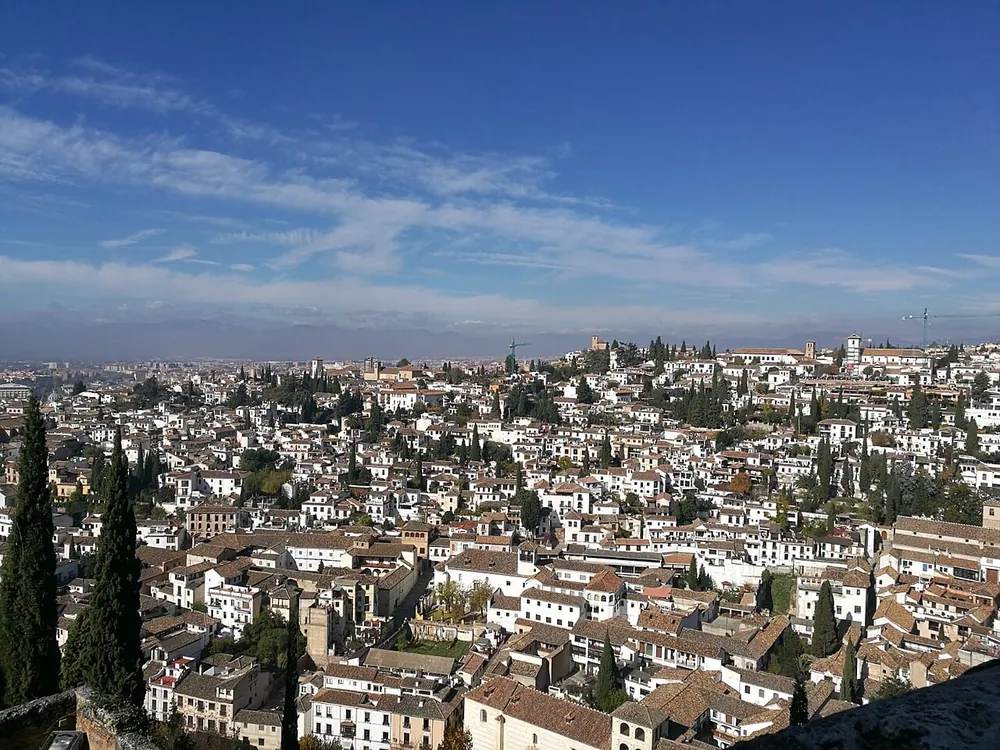
Seville to Granada is 2h45–2h52 and **there are only four trains a day**, so this is the one leg whose timetable dictates your morning. The Alhambra General Day Visit is €22.27 and covers a timed Nasrid Palaces slot, the Generalife and the Alcazaba. The third night buys the part people actually describe afterwards: the Albaicín on foot, and the road up into the Alpujarras.
Sleep: The Albaicín, uphill and worth it, or Realejo for flatter streets.
Day 14 · Málaga, and out
Two ways home, and they are not equivalent
Granada's own airport is small and routes almost everything through Madrid or Barcelona. Málaga is an hour and a half away by bus and flies direct to most of Europe. The alternative is the AVE back to Madrid, which only works if your flight is late enough to leave the day intact. Decide this when you book the flight home, not on day thirteen.
Sleep: Nowhere. This is the day you leave.
Best things to do on this route
If you cut the trip short, these are the ones to keep.
- 01
The free hour at the Mezquita
Monday to Saturday, 08:30 to 09:30, no ticket. Hundreds of striped arches and almost nobody under them. The best hour on this route, and it costs nothing.
- 02
The Nasrid Palaces on a slot booked months ago
€22.27, timed, and the reason people fly to Granada. Its booking window is the hard constraint on the entire itinerary.
- 03
The Prado in its last two hours
Free every day before closing, and emptier then than at any point when it is not. Velázquez and Goya without a shoulder in the way.
- 04
Toledo, thirty-four minutes from Atocha
A walled city on a spur above the Tagus, and a shorter train ride than the run out to the airport.
- 05
The Albaicín at sunset
The Mirador de San Nicolás looks straight across at the Alhambra with the Sierra Nevada behind it. Free, and crowded for a reason.
Where to stay
Neighbourhoods rather than specific hotels. Prices move, areas don't.
Barcelona: Gràcia
Village squares, no cruise crowds, and a metro ride from everything. The tax is identical across the city, so spend the money on the neighbourhood instead.
Madrid: Malasaña or Lavapiés
Where Madrid actually eats. Central enough to walk to the Prado, cheap enough to notice straight after Barcelona.
Seville: Triana
Across the river from the monuments, which is why it costs less and sounds better. Ten minutes on foot to the cathedral.
Granada: the Albaicín
Whitewashed lanes above the city with the Alhambra opposite. Steep, cobbled, and no use at all with a wheeled suitcase.
What it cost
Per person, 14 days. International flights not included.
| Category | Cost |
|---|---|
| Accommodation: 13 nights | €1,280 / $1,484 |
| Food and drink | €770 / $893 |
| Activities and entry fees | €160 / $185 |
| Trains: five legs, booked early | €155 / $180 |
| Local transport and airport transfers | €90 / $104 |
| SIM, laundry, everything else | €60 / $70 |
| Barcelona tourist tax: 3 nights | €35 / $41 |
| Total | €2,550 / $2,956 |
Converted at €1 = $1.1593, checked 2 September 2026. About €182 a day, which is roughly what mid-range travel costs anywhere in Spain. The train line is the striking one: €155 carries you the length of the country five times, and only because it was booked early. The same five legs bought at the station would come to something like three times that.
Getting around
Book the Alhambra two to three months out, four for summer
Tickets go on sale three months ahead, and in peak season general admission sells out one to two months before the date. This is not a queue you can beat by turning up; once the slots are gone there is no on-the-door supply. Book it before anything else on this trip and build the fortnight backwards from the date you get.
AVE fares behave like airline fares
Madrid to Barcelona is €17 booked early and €94.90 at the official tourist-class rate. The cheap fares are released months ahead and disappear; booking the day before can cost four times the early price. Fix the dates and buy all five legs in one sitting.
Seville to Granada runs four times a day
2h45 to 2h52, and only four departures, much the thinnest service on this route. Book it as soon as you know your Alhambra slot, and take a morning train so that day eleven is still a day in Granada.
About the Madrid–Seville line
Two high-speed trains collided near Adamuz on the Madrid–Seville line on 18 January 2026. The line reopened on 17 February and the Málaga branch on 27 April; services have run to timetable since. Investigators traced the cause to a fractured rail from a bad weld. It is the question anyone researching Spanish rail this year ends up asking, and the answer is that the line is open and running normally.
Photos
Packing notes
The things that are annoying to find locally, or that people forget.
- Shoes you can climb in. The Albaicín is cobbled and near-vertical, and Toledo is a granite spur.
- Alhambra tickets bought months ago, before the flights.
- A refillable bottle. Andalusian street fountains are drinkable and August is not survivable without one.
- A light layer for Granada. It sits at 700m under the Sierra Nevada and the evenings drop hard.
- Cards work everywhere; carry €20 in coins for lockers and the odd village bar.
- A soft bag rather than a hard case if you are sleeping in the Albaicín. There are steps.
Why the triangle is the wrong shape
Barcelona, Madrid, Seville is the itinerary nearly everyone writes, and it made sense when the trains were slow. It is now a plan built around distances that no longer exist.
Córdoba sits directly on the line between Madrid and Seville. Stopping there costs you a night, not a travel day, the train passes through it either way. Granada is under three hours from Seville. Toledo is thirty-four minutes from Atocha, which is less than the run out to Barajas.
The three-city version spends a fortnight seeing three cities. The same fortnight, on the same rail line, with the same number of long journeys, sees six.
What the Alhambra does to your calendar
Every other ticket on this route can be bought on the day or close to it. The Alhambra cannot. Sales open three months ahead, and in peak season general admission is gone one to two months before the date.
This inverts the usual order of planning. You book the Alhambra first and fit the flights to it, because a Granada slot on the 14th means Seville on the 8th, Madrid on the 4th and a plane that lands on the 1st. Do it the other way round and you either reshuffle the whole itinerary or you spend three nights in Granada looking at the outside of the thing you came for.
The tax that applies to a fifth of the trip
Barcelona doubled its city surcharge on 1 April 2026. At €9.50 to €12.00 per person per night, three nights for two people is €57 to €72. Real money, and invisible until checkout, because it is almost never included in the rate you booked.
It also stops at the city limits. Madrid charges nothing. Andalusia charges nothing at all, which means Córdoba, Seville and Granada, seven of the thirteen nights, cost what the booking said. The tax is a Barcelona fact rather than a Spain fact, and it is one more argument for three nights there instead of five.
The hour that justifies sleeping in Córdoba
Most itineraries treat Córdoba as a two-hour gap between trains: leave the bags at the station, walk to the Mezquita, walk back.
That version pays €15 and shares the building with everyone else doing exactly the same thing. Staying the night gets you in free, between 08:30 and 09:30, Monday to Saturday, and the point is not the fifteen euros. It is that the hypostyle hall is hundreds of columns of striped arches receding in every direction, and it only works when you can see down the aisles. At eleven in the morning you are looking at the backs of people’s heads.
One night. It is the cheapest bed on the route and it buys the best hour.