Greece · Itinerary · Updated September 2026
7 days in Greece: Athens and one island, properly
A week of island-hopping is mostly ports. This route takes one ferry out and one back, and spends the four days it saves on the island instead. Fares and fees checked September 2026.
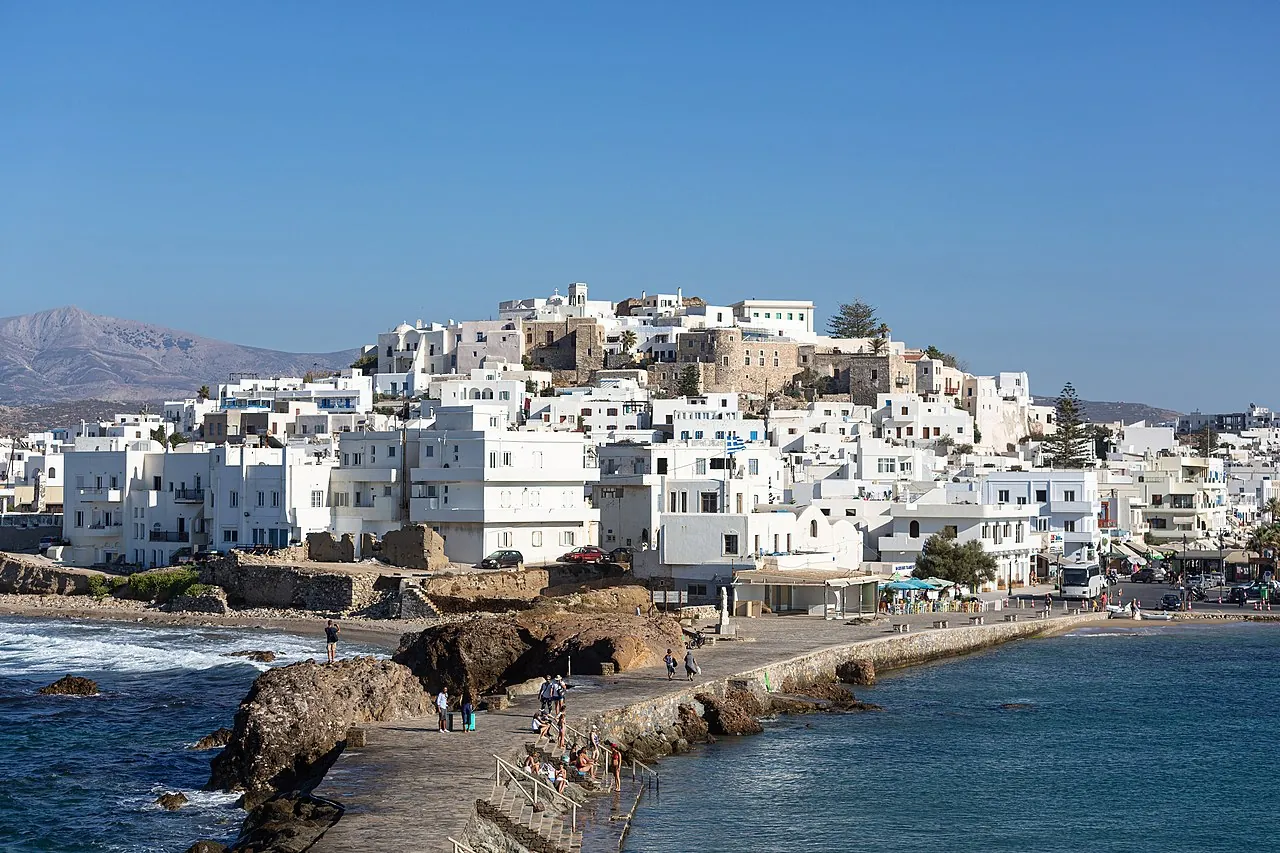
Manfred Werner (Tsui) / Wikimedia Commons, CC BY-SA 4.0
Length
7 days
Budget
€1,185 / $1,374
per person, mid-range
Best season
May–Jun, Sep–Oct
July and August are hot, full and double the price
Stops
3
1 island, 2 ferries
The route
Two nights in Athens, the fast ferry to Naxos for four, and back to Piraeus for the flight home.
Day by day
Days 1–2 · Athens
Two nights, and the Acropolis booked from home
The Acropolis is €30 with **mandatory timed entry**, capped at 20,000 visitors a day, and it sells out five to seven days ahead from June to August. Book it before you fly, and take the first slot. By eleven the rock is full and there is no shade on it. The Acropolis Museum fills the afternoon. The evening is free Athens: Anafiotika's lanes, and Filopappou hill for the view of the Acropolis you cannot get from standing on it.
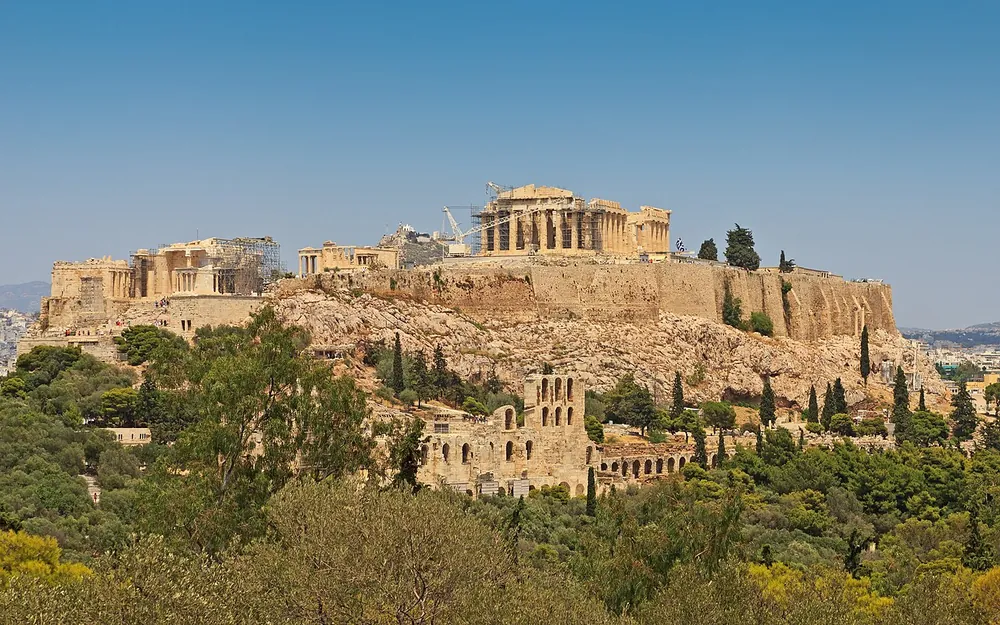
Sleep: Koukaki, five minutes from the museum, cheaper and quieter than Plaka.
Days 3–6 · Naxos
Four nights, one bed, and an island with an inside
Piraeus to Naxos is 3h15 on the fast ferry, from about €52. Four nights is what makes this itinerary work rather than merely fit: two days on the west-coast beaches, and two inland, which is the part almost nobody sees. Halki and Apiranthos are marble-street villages an hour up into the mountains; the old quarries still have their unfinished kouroi lying in the grass where they cracked. Hire a car for two of the four days.
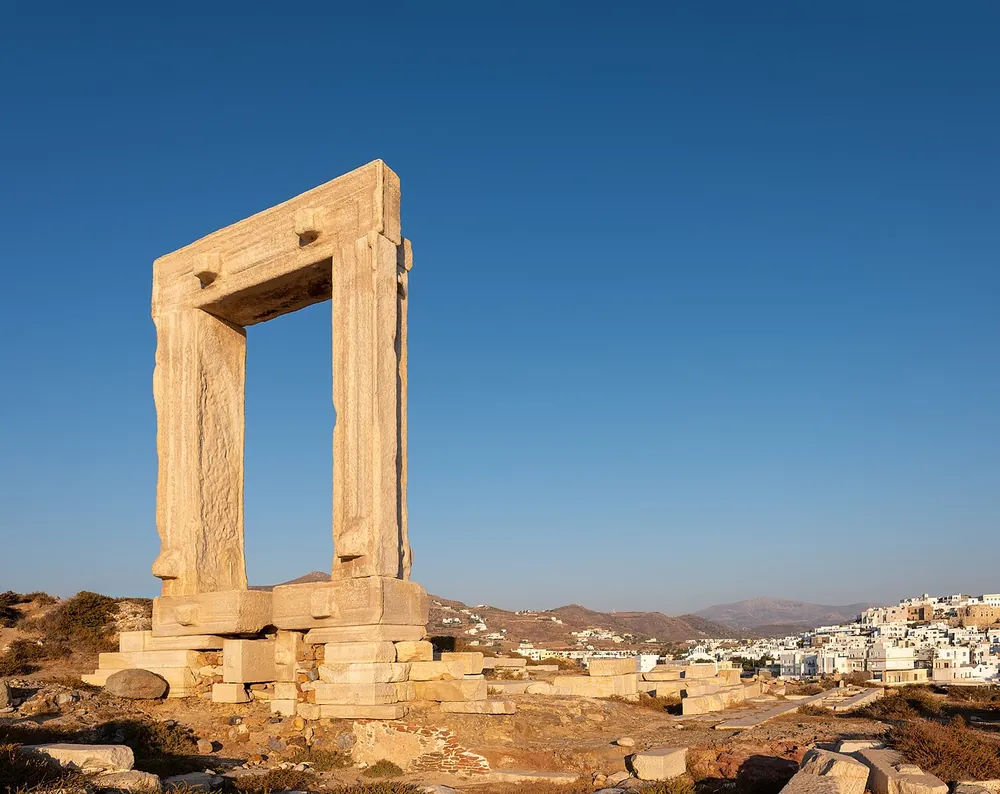
Sleep: Naxos Town for the harbour and the tavernas; Agios Prokopios for the beach.
Day 7 · Athens, and out
The ferry back, and the flight
The morning ferry puts you at Piraeus by early afternoon, and the metro runs from the port to the airport. If your flight is late enough, the National Archaeological Museum is worth the two hours between. It holds what the Acropolis Museum does not.
Sleep: Nowhere. This is the day you leave.
Best things to do on this route
If you cut the trip short, these are the ones to keep.
- 01
The Acropolis on the first slot of the day
€30 and timed. At eight it is cool and half empty; by eleven it is neither, and there is no shade anywhere on the rock.
- 02
The mountain villages of Naxos
Halki and Apiranthos, an hour inland. Marble streets, no cruise passengers, and the only island interior you will find on a one-week Greek trip.
- 03
The Portara at sunset
A single marble doorway on the islet by Naxos harbour, all that was built of a temple to Apollo. Free, and five minutes from town.
- 04
Filopappou hill
Free, ten minutes from Koukaki, and the view of the Acropolis the Acropolis cannot give you.
- 05
The unfinished kouroi
Abandoned marble figures still lying in the old quarries at Flerio and Apollonas, cracked and left where they fell.
Where to stay
Neighbourhoods rather than specific hotels. Prices move, areas don't.
Athens: Koukaki
Quieter and cheaper than Plaka, five minutes from the Acropolis Museum and on the metro to the port.
Naxos: Naxos Town
The harbour, the old Venetian kastro and the tavernas, with the ferry on your doorstep for both legs.
Naxos: Agios Prokopios
Long sand and a ten-minute bus into town. Better if the beach is the point of the four nights.
What it cost
Per person, 7 days. International flights not included.
| Category | Cost |
|---|---|
| Accommodation: 6 nights | €480 / $556 |
| Food and drink | €350 / $406 |
| Local transport and two days of car hire | €110 / $128 |
| Ferries: one each way | €105 / $122 |
| Activities and entry fees | €70 / $81 |
| SIM, laundry, everything else | €40 / $46 |
| Climate resilience fee | €30 / $35 |
| Total | €1,185 / $1,374 |
Converted at €1 = $1.1593, checked 2 September 2026. About €169 a day, the cheapest of the Greece routes, because one island means two ferries rather than three, and Naxos is a materially cheaper bed than Santorini or Mykonos. The climate resilience fee is charged per room per night: €5 at a three-star from April to October, €10 at a four-star, €1.50 and €3 in winter.
Getting around
Two ferries, and that is the whole itinerary
Piraeus to Naxos is 3h15 on the fast ferry from about €52, and the same back. Book ahead in July and August, when boats sell out; outside that a day or two is enough. The port is a metro ride from central Athens.
Book the Acropolis before you fly
€30, compulsory timed entry, 20,000 visitors a day, and sold out five to seven days ahead in peak season. It is the only ticket on this route that cannot be bought on arrival, and missing it wastes one of your two Athens days.
Hire a car on Naxos, not a scooter
The interior is why you came and the bus network does not reach it. Two days is enough for the mountain villages, the quarries and the east coast. Roads are good; the mountain ones are narrow and unfenced.
Flying to the island is usually a false economy
Naxos has an airport, but flights route through Athens, cost more than the ferry and save an hour at best once transfers are counted. The ferry also arrives in the town rather than outside it.
Packing notes
The things that are annoying to find locally, or that people forget.
- Shoes with grip. Cycladic villages are marble worn smooth by several centuries of feet.
- A hat and real sunscreen. There is no shade on the Acropolis and very little on Naxos's beaches.
- Seasickness tablets. The meltemi roughens the Aegean from July to September and the fast ferries feel it most.
- Timed Acropolis tickets bought from home, before anything else on the trip.
- A light jacket for the evenings; the wind drops the temperature more than people expect.
- Cash for village tavernas and island buses, though cards work nearly everywhere now.
Why one island and not three
Because at seven days each hop costs a morning. You check out, cross to the port, wait, sail, find the new place, and buy food again, and two nights somewhere is one real day there plus two half-days of logistics.
Three islands in a week is three of those. What is left is a set of harbour fronts and a strong memory of ferries.
Four nights in one place buys the opposite: a car for two days, an interior, villages that empty of visitors by six, and a beach you return to rather than find. Naxos is the island that repays it, being the largest of the Cyclades and the only one on this site with a mountain range in the middle.
Why Naxos rather than Santorini
Santorini is the more famous view and the worse week. It is the most expensive bed in the Cyclades, its caldera path is shared with several cruise ships a day, and there is no interior to escape into. The island is a rim.
If the caldera is the reason you are going, do not compress this itinerary. The 10-day route adds three nights on Santorini without taking anything from Naxos, and the 14-day adds Mykonos and Delos as well.
If you have exactly seven days and Santorini is non-negotiable, swap it for Naxos rather than adding it, same two ferries, same shape of trip. Book inland at Pyrgos or Megalochori rather than on the rim: half the price, better food, and the bus to Oia for sunset costs nothing.
What the fourth night buys
Three nights on Naxos gets you the beaches and the town. The fourth is the one that goes inland. Halki, Apiranthos, and the quarries where the unfinished kouroi still lie cracked in the grass, which is the part of the island people describe afterwards and the part no ferry schedule will give you at two nights.