Greece · Itinerary · Updated September 2026
10 days in Greece: Athens, Naxos and Santorini
Ten days holds two islands well or four badly. This route takes Naxos and Santorini, both on the same ferry line, and spends the saved mornings on the islands instead of in ports. Fares and fees checked September 2026.
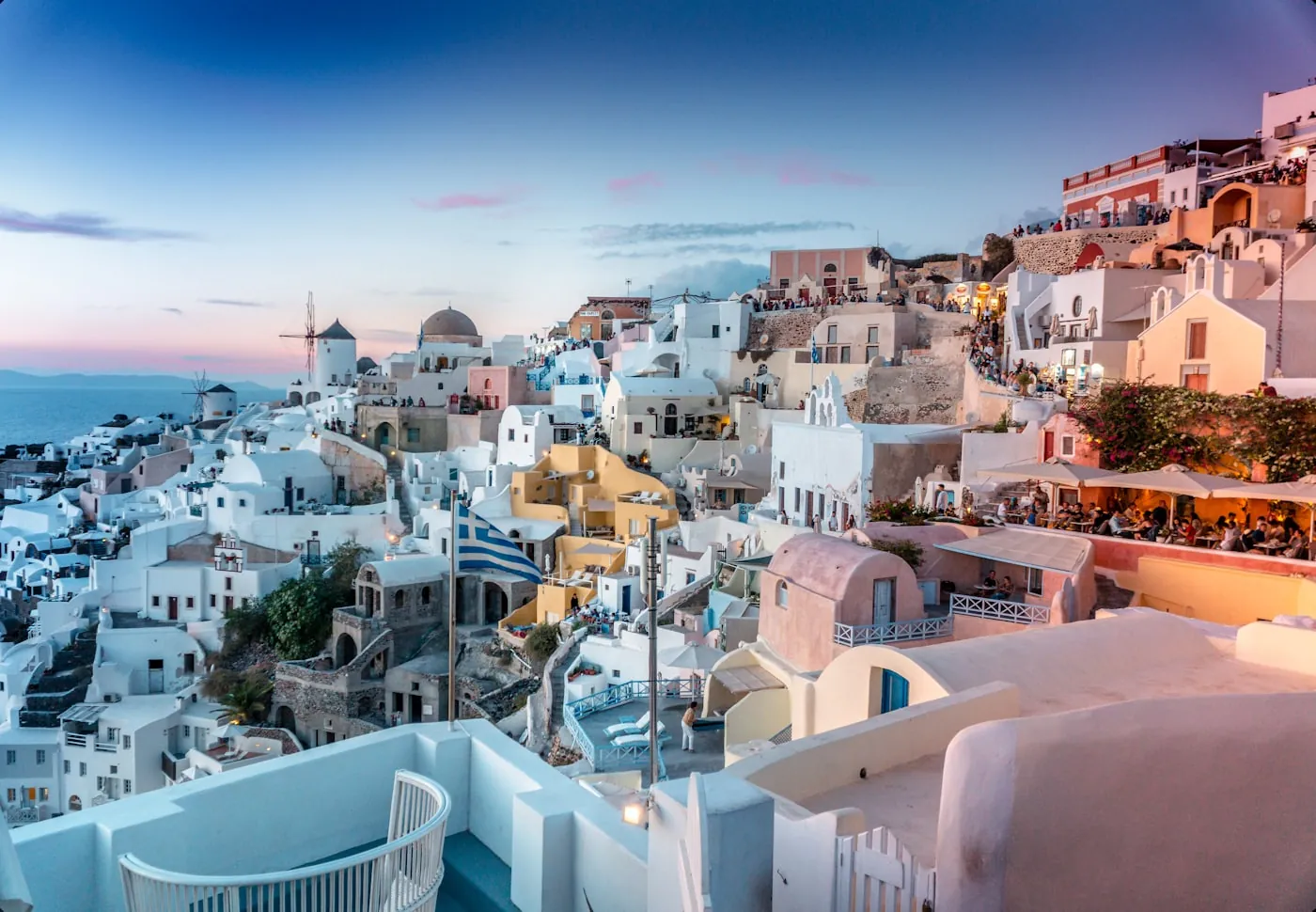
Length
10 days
Budget
€1,675 / $1,942
per person, mid-range
Best season
May–Jun, Sep–Oct
July and August are hot, full and double the price
Stops
4
3 bases, 2 ferries
The route
Two nights in Athens, four on Naxos, three on Santorini, out through Santorini's airport.
Day by day
Days 1–2 · Athens
Two nights, and the Acropolis booked from home
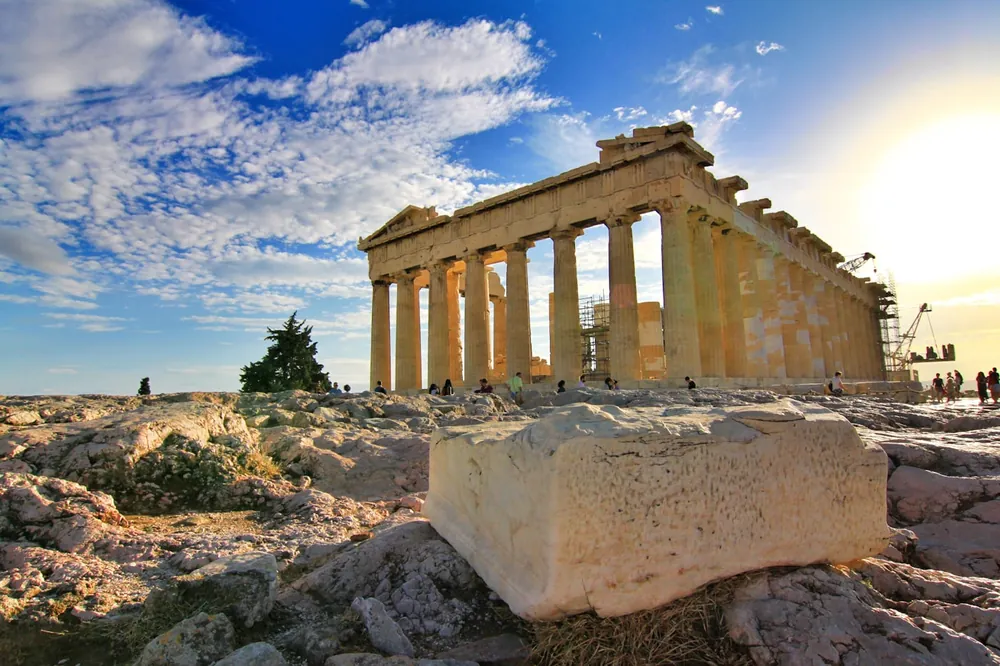
The Acropolis is €30 with **mandatory timed entry**, capped at 20,000 visitors a day, and it sells out five to seven days ahead from June to August. Book it before you fly and take the first slot. By eleven the rock is full and there is no shade on it. The Acropolis Museum fills the afternoon. Day two is free Athens: Anafiotika, the Monastiraki market, and Filopappou hill at sunset for the view of the Acropolis you cannot get from on it.
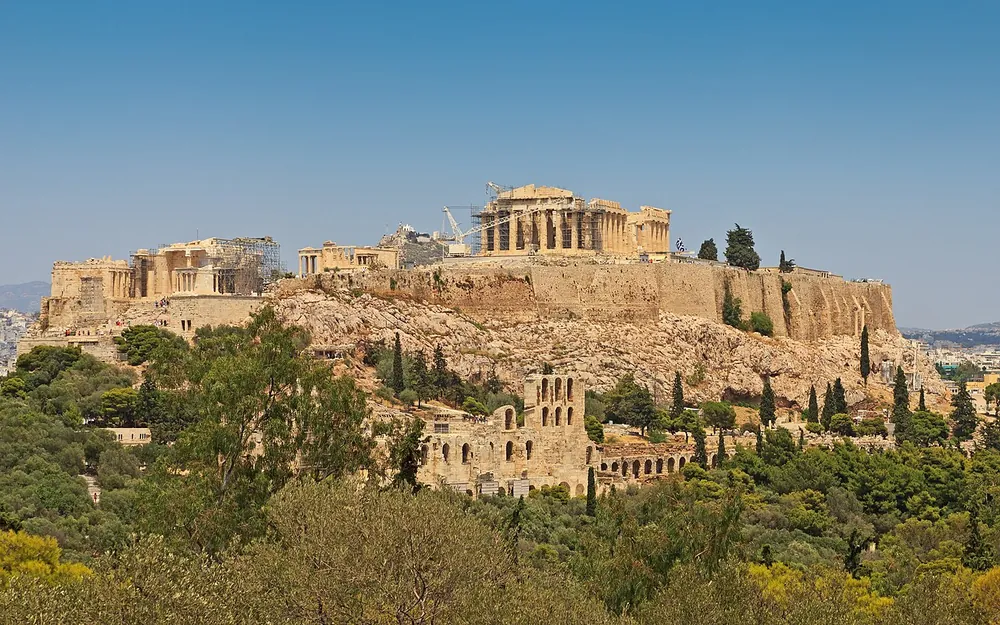
Sleep: Koukaki, five minutes from the museum and cheaper than Plaka.
Days 3–6 · Naxos
Four nights, and the only island here with an interior
Piraeus to Naxos is 3h15 on the fast ferry, from about €52. Four nights means two on the coast and two inland: the mountain villages of Halki and Apiranthos, the marble quarries with their unfinished kouroi lying in the grass, and the long west-coast beaches that never fill the way Mykonos does. Hire a car for two of the days. The bus network exists but the interior is why you came.
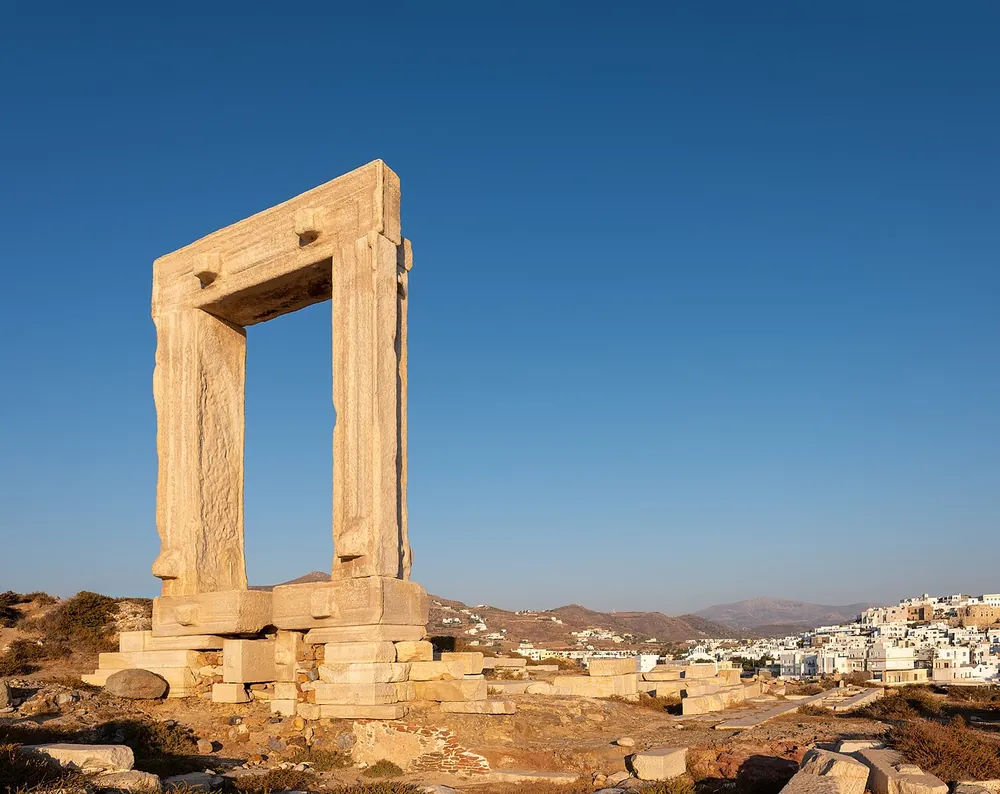
Sleep: Naxos Town for tavernas and the port; Agios Prokopios for the beach.
Days 7–9 · Santorini
Three nights, inland, not on the rim
Naxos to Santorini is two hours or so, from about €31. Stay in Oia or Imerovigli and you pay double for a caldera view you spend the day away from; stay in Pyrgos or Megalochori inland and you eat better and bus to the rim for sunset with everyone else. The Fira to Oia caldera walk is three hours. Start at seven. Akrotiri, the Bronze Age town buried by the eruption, is the thing most visitors skip and should not.
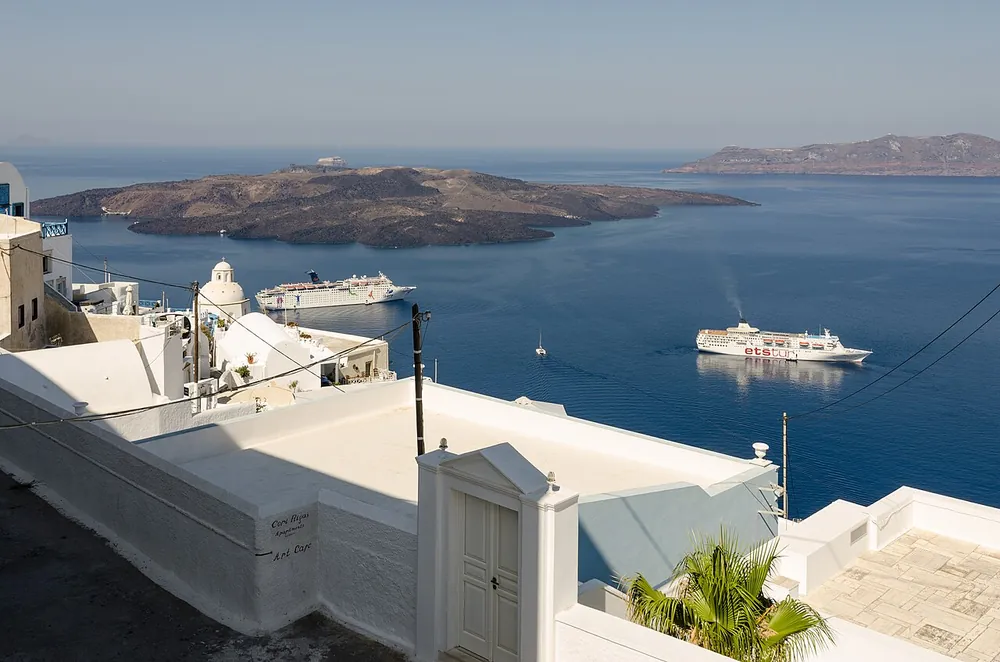
Sleep: Pyrgos or Megalochori. The view costs double and you sleep facing a wall.
Day 10 · Santorini airport
Out from the island
Santorini flies internationally through the season and to Athens all year. Ferrying back to Piraeus would cost eight hours, a fifth of this holiday, so book open-jaw: into Athens, out of Santorini. It usually costs the same as a return.
Sleep: Nowhere. This is the day you leave.
Best things to do on this route
If you cut the trip short, these are the ones to keep.
- 01
The Acropolis on the first slot
€30 and timed. At eight it is cool and half empty; by eleven it is neither, and there is no shade anywhere on the rock.
- 02
The mountain villages of Naxos
Halki and Apiranthos, an hour inland. Marble streets, no cruise passengers, and the only island interior on this route.
- 03
Akrotiri on Santorini
A Bronze Age town buried by the eruption and dug out under a roof. Most visitors skip it for the sunset and get the worse half of the island.
- 04
The Fira to Oia caldera walk
Three hours along the crater rim. Start at seven and most of it is yours.
- 05
Filopappou hill at sunset
Free, ten minutes from Koukaki, and the view of the Acropolis the Acropolis cannot give you.
Where to stay
Neighbourhoods rather than specific hotels. Prices move, areas don't.
Athens: Koukaki
Quieter and cheaper than Plaka, five minutes from the Acropolis Museum and the metro.
Naxos: Town or Agios Prokopios
Naxos Town for the harbour and the ferry; Agios Prokopios for sand and a ten-minute bus into town.
Santorini: Pyrgos or Megalochori
Inland villages at half the caldera price, with better food and a bus to the rim for sunset.
What it cost
Per person, 10 days. International flights not included.
| Category | Cost |
|---|---|
| Accommodation: 9 nights | €765 / $887 |
| Food and drink | €500 / $580 |
| Local transport and two days of car hire | €120 / $139 |
| Ferries: two legs | €115 / $133 |
| Activities and entry fees | €80 / $93 |
| SIM, laundry, everything else | €50 / $58 |
| Climate resilience fee | €45 / $52 |
| Total | €1,675 / $1,942 |
Converted at €1 = $1.1593, checked 2 September 2026. About €168 a day, slightly under the 14-day route's €171 because the dropped Mykonos leg is the most expensive ferry in the Cyclades and Mykonos itself the dearest bed. The climate resilience fee is per room per night: €5 at a three-star from April to October, €10 at a four-star, €1.50 and €3 in winter.
Getting around
Two ferries, one line
Piraeus to Naxos from about €52, 3h15. Naxos to Santorini from about €31, around two hours. Both are Cyclades and both run frequently in season. Book ahead in July and August; outside that a day or two is plenty.
Book the Acropolis before you fly
€30, compulsory timed entry, 20,000 a day, sold out five to seven days ahead in peak. It is the only ticket here that cannot be bought on arrival, and the only one that will wreck a two-night Athens stay if missed.
Fly out of Santorini
The ferry back to Piraeus is eight hours. On a ten-day trip that is a fifth of the holiday spent going backwards. Open-jaw fares are usually the same price as a return.
Hire a car on Naxos, not on Santorini
Naxos has an interior worth driving and a bus network that does not reach it. Santorini is small, congested and has buses to everywhere you want to go, and parking in Oia in season is a competitive sport.
Photos
Packing notes
The things that are annoying to find locally, or that people forget.
- Shoes with grip. Cycladic villages are marble worn smooth and the caldera path is loose scree in places.
- A hat and real sunscreen. No shade on the Acropolis, at Akrotiri's approach, or on the caldera walk.
- Seasickness tablets. The meltemi wind roughens the Aegean from July to September and the fast ferries feel it most.
- Timed Acropolis tickets bought from home.
- A light jacket for evenings; the wind drops the temperature more than people expect.
What dropping Mykonos costs
Delos, and that is the whole of it. The boat to the abandoned ancient city goes from Mykonos and nowhere else on this route, and it is the best archaeological site in the islands, a complete Greek town with no modern one built on top and nobody living there.
Mykonos itself is no loss at this length. It is the most expensive bed in the Cyclades, its town is lovely for one evening and crowded for every other hour, and its beaches are the ones Naxos does better and cheaper.
So the trade is: two nights and the dearest ferry on the line, in exchange for one extraordinary day. At fourteen days that trade is worth making, the 14-day route makes it. At ten it is not, because those two nights come out of Naxos and Athens, and both need theirs.
Why not add Paros
It is the fourth island everyone considers, it is genuinely lovely, and it would cost two nights on Naxos. Naxos is bigger, cheaper, has a real interior and is the only island on this itinerary you could describe properly afterwards. Paros is what you add on a second trip, not what you take from Naxos on the first.